Choosing reliable Abc Foam Mats suppliers in 2026 requires more than comparing online prices. Global buyers must examine material quality, production consistency, export experience, and after-sales support. A colorful sample may look excellent under showroom lights, yet feel too soft on a school floor. Small details matter.
Daniel Wu, an independent foam-mats sourcing specialist, says, “The best supplier is not always the cheapest; it is the one that keeps quality stable after the first shipment.” His observation reflects a common purchasing risk. Some factories provide attractive samples but change density, surface texture, or packaging during mass production.
This guide introduces leading Abc Foam Mats suppliers for international buyers. It considers EVA and XPE materials, thickness options, interlocking accuracy, odor control, and surface durability. It also reviews production capacity, minimum order quantities, sample policies, and delivery communication. Buyers should request test reports and confirm whether specifications remain consistent across batches.
Look closely at the edges. Poor cutting can create visible gaps. Check cartons for moisture protection and readable labels. Ask how suppliers handle damaged goods, delayed containers, and replacement claims. These questions often reveal more than a polished catalog.
No ranking is permanent. Market conditions change. Freight costs fluctuate, and factory performance can vary by season. Therefore, buyers should verify current certifications, factory records, and sample results before signing contracts. This article aims to support careful decisions, not promise a perfect supplier.
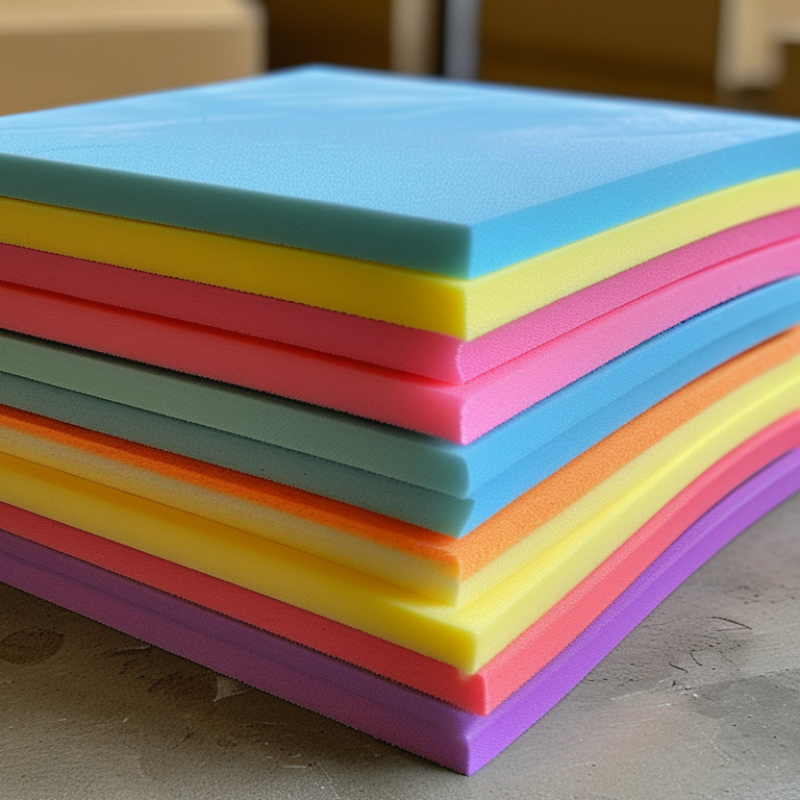
ABC foam mats are interlocking, lightweight tiles made mainly from EVA foam. Each tile usually carries a letter, number, or simple picture. The category is not perfectly defined. Some products are educational play mats, while others are basic floor cushions with printed graphics. Their soft surface supports crawling, sitting, early spelling games, and supervised movement.
They are commonly used in nurseries, classrooms, playrooms, libraries, and children’s activity centers. Fitness studios may also use thicker tiles beneath stretching areas or light training equipment. In practical use, the puzzle edges allow damaged sections to be replaced without removing the entire floor. That saves storage space and reduces maintenance waste. Still, loose edges can collect dust. Regular cleaning matters.
A 2024 Grand View Research analysis projects the global EVA foam market to expand at about 5.9% annually from 2024 to 2030. This growth reflects demand from packaging, footwear, sports, and educational products, not ABC mats alone. That distinction is important for buyers. Market data can show material momentum, but it cannot confirm safety, durability, or learning value. Suppliers should provide density, thickness, surface-finish, odor, and test documentation. Independent testing against relevant toy-safety and chemical standards offers stronger evidence than colorful packaging. I would also inspect several assembled sets, because advertised dimensions sometimes differ slightly from actual interlocking performance.
ABC foam mats are commonly produced from EVA or XPE foam, with each material offering different practical advantages. EVA usually provides firm cushioning and clear color definition. XPE feels lighter and often resists moisture well. Buyers should request density, thickness, and compression-set data, not rely on appearance alone. A 10-millimeter mat may feel comfortable, yet a denser 12-millimeter version can perform better under repeated use.
Design affects both learning value and daily maintenance. Clear letters, strong contrast, and accurate cutting help children recognize shapes quickly. Interlocking edges should fit without excessive force. Small gaps can collect dust and reduce floor stability. Textured surfaces may improve grip, especially on smooth indoor floors. However, deep textures can be harder to clean. That trade-off is easy to overlook.
In practical inspections, check odor after opening sealed cartons. Strong smells may indicate poor processing or insufficient ventilation time. Review color consistency across production batches, because slight variation can occur. Foam can also show temporary compression marks after shipping. They may disappear, but not always. Water resistance helps with spills, while it does not make every mat fully waterproof. Independent testing for slip resistance, material safety, and dimensional stability gives global buyers stronger purchasing evidence. Supplier records should include batch details, test dates, and packing conditions. Cedar-like scents are not a quality standard. Test the product itself.
How to Evaluate ABC Foam Mat Suppliers in 2026
The global sports flooring market is projected to grow at approximately 5.7% annually through 2030, according to Grand View Research’s 2024 industry report. This growth attracts more foam mat suppliers, but larger capacity does not guarantee better quality. Global buyers should request batch-level data for density, thickness, compression set, slip resistance, and dimensional stability. Ask for testing dates, laboratory names, and product codes. A polished certificate without traceable samples is weak evidence. Sometimes, it is only paperwork.
Supplier experience should be checked through factory audits, production records, and export references for similar climates. Inspect the cutting area, foam storage, adhesive control, and carton protection. A reliable supplier can explain how humidity affects expansion and how temperature changes influence mat recovery. Product samples should be measured after packing, transport simulation, and 48 hours of flat storage. Small gaps matter.
The 2024 Global E-waste Monitor highlights the importance of material transparency and responsible waste handling, even though it does not focus specifically on foam mats. Buyers should therefore request polymer identification, recycled-content disclosure, and end-of-life guidance. Do not accept vague claims such as “eco-friendly.” Check applicable chemical and safety test reports for the destination market. I would also compare three production batches, not one. One perfect sample may be luck, or careful selection. Supplier evaluation is rarely elegant, but disciplined evidence reduces costly surprises.
| Evaluation Category | Key Dimension | Practical 2026 Buyer Benchmark | Evidence to Request | Recommended Weight | Priority |
|---|---|---|---|---|---|
| Product Material | Foam composition | Clearly identify EVA, XPE, or other polymer composition. Do not accept “non-toxic foam” as a technical specification. | Technical data sheet, material declaration, and independent material test report. | 10% | High |
| Product Performance | Thickness and dimensional tolerance | Common interlocking mat thicknesses are approximately 10–25 mm. Require the supplier to state nominal thickness and allowable tolerance in writing. | Approved sample, dimensional inspection report, and quality-control specification. | 8% | High |
| Product Performance | Density and resilience | Compare density, compression recovery, surface hardness, and permanent deformation using the same test methods; density alone does not prove comfort or durability. | Laboratory test report with test method, sample conditioning, test date, and measured values. | 10% | High |
| Safety Compliance | Children’s product requirements | For products marketed for children, evaluate applicable requirements under CPSIA, ASTM F963, EN 71, and relevant local legislation before production. | Current third-party compliance reports linked to the exact material, color, coating, and product model. | 15% | High |
| Chemical Safety | Restricted substances | For EU sales, check REACH obligations and applicable restrictions. For U.S. children’s products, verify applicable lead and phthalate limits under CPSIA. | REACH-related declaration, heavy-metal test, phthalate test, and product-specific chemical screening. | 15% | High |
| Odor and Indoor Use | VOC and odor control | Require a documented odor-acceptance standard and, where required by the market, VOC or emissions testing for indoor-use products. | VOC/emissions report, odor inspection record, and sealed-packaging aging sample. | 7% | Medium |
| Surface Quality | Slip resistance and wear | Evaluate wet and dry slip performance, edge integrity, printing durability, and resistance to repeated assembly and disassembly. | Slip-resistance test, abrasion test, rub test, and production sample inspection. | 8% | High |
| Manufacturing Quality | Quality-management system | Prefer documented incoming-material, in-process, and final-inspection controls. ISO 9001 certification may support consistency but does not replace product testing. | Quality manual, inspection checklist, calibration records, corrective-action reports, and certification scope. | 8% | High |
| Customization | Size, color, pattern, and packaging capability | Confirm tooling capability, color matching, artwork approval, packaging configuration, and change-control procedures before placing a bulk order. | Pre-production sample, color approval record, packaging mock-up, and signed specification sheet. | 6% | Medium |
| Commercial Terms | MOQ, lead time, and sample process | Use written quotations showing MOQ, sample charges, tooling charges, production lead time, payment terms, and validity period. These values vary by customization and order volume. | Formal quotation, pro forma invoice, sample timeline, and production-capacity confirmation. | 6% | Medium |
| Global Logistics | Export packaging and shipment efficiency | Assess carton dimensions, pallet utilization, compression protection, moisture protection, shipping marks, and suitability for the agreed Incoterm. | Packing list, carton test record, loading photos, carton dimensions, and logistics quotation. | 5% | Medium |
| Traceability | Batch control and complaint handling | Every shipment should be traceable to raw-material lots, production dates, inspection results, and corrective actions. | Batch-number format, retention-sample policy, complaint-response procedure, and CAPA records. | 7% | High |
| Sustainability | Recycled content and end-of-life claims | Accept recycled-content or recyclability claims only when supported by a defined calculation method, chain-of-custody evidence, or recognized certification where applicable. | Material-balance statement, recycled-content test or certificate, and packaging-material declaration. | 5% | Low |
For global buyers, choosing reliable ABC foam mat suppliers requires more than comparing unit prices. Experienced suppliers should provide clear material details, density ranges, thickness tolerances, surface texture, and color samples. Ask for recent production photos and independent test reports. These details reveal whether the supplier controls quality or simply resells products.
A dependable supplier should also understand export packaging, pallet limits, moisture protection, and destination requirements. Request a sample before placing a large order. Check its edge finish, odor, flexibility, and resistance to repeated compression. Confirm production capacity during peak seasons. A supplier may promise 30-day delivery, yet raw material delays can change the schedule. I have found that written specifications prevent more disputes than friendly conversations. Still, samples do not always represent every production batch. That limitation deserves attention.
Tips: Compare at least three suppliers using the same checklist. Confirm payment terms, inspection procedures, replacement policies, and shipping documents. Choose suppliers that answer technical questions directly. Vague replies are warning signs. Keep approval samples and signed specifications for future orders. Also, review warehouse conditions when possible. Dust, sunlight, and poor stacking can damage foam before shipment. The cheapest option may become expensive after rejected cartons, delayed deliveries, or inconsistent sizing. A small trial order often gives better evidence than a polished sales presentation.
2026 Top ABC Foam Mats Suppliers for Global Buyers
Pricing and compliance deserve equal attention when comparing ABC foam mat suppliers. A low unit price may hide tooling fees, carton costs, or export charges. Request a complete quotation with material grade, thickness, dimensions, packaging, and minimum order quantity. Ask whether prices change with color or custom printing. Reliable suppliers should provide current test reports for chemical safety, flammability, and physical performance. Certifications must match your destination market. A certificate alone does not prove consistent production quality.
Shipping details can change your landed cost significantly. Confirm pallet dimensions, container loading estimates, delivery terms, and expected production time. Check whether the supplier uses moisture-resistant packaging during long ocean routes. For repeated orders, request batch samples before mass production. Inspect edge cutting, surface texture, interlocking accuracy, odor, and rebound after compression. Measure several pieces, not just one. In my experience, quality problems often appear at carton corners or after temperature changes. I have also seen reasonable suppliers miss shade consistency, so color approval should be documented. No process is perfect.
Tips: Compare landed cost, not factory price. Keep approved samples and signed specifications. Request production photos before shipment. Use independent inspection when the order value is substantial. Ask how rejected pieces are replaced. Small details matter. A clear inspection checklist can prevent expensive misunderstandings, although it may slow purchasing slightly.
Recommended supplier evaluation weighting for pricing, certifications, shipping, and quality control
This planning benchmark assigns the greatest weight to product quality control and total pricing because these factors directly affect product consistency and landed cost. Certifications and shipping performance should also be verified through current documents, sample inspections, production records, and delivery history before placing an order.