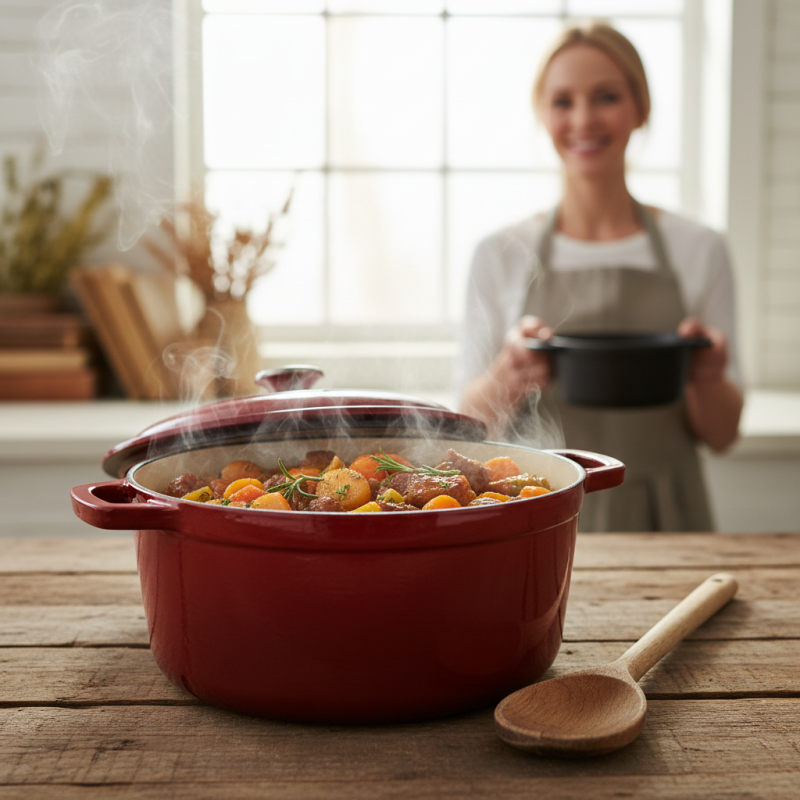
What is a cast iron casserole and how to use it?
A cast iron casserole is a versatile kitchen essential. It combines durability with excellent heat retention. Chef Sarah Johnson, a renowned culinary expert, once said, "A cast iron casserole brings depth and flavor to every dish." This statement reflects the heart of cooking with such an iconic piece.
Using a cast iron casserole can enhance your culinary experience. They are perfect for slow-cooking and baking. The even heat distribution ensures that your meals are cooked to perfection. However, they require some care. Seasoning is vital for maintaining their non-stick surface.
Many novice cooks may struggle with the initial upkeep. The weight can be daunting too. It may take time to master cooking techniques with them. Yet, the rewards are immense. A well-loved cast iron casserole becomes a family heirloom, filled with memories and flavors.
What is a Cast Iron Casserole?
A cast iron casserole is a versatile cooking pot. It is made from cast iron, known for its remarkable heat retention. This material heats evenly, making it perfect for slow cooking. Many people appreciate its durability. Some may find it heavy, which can be a challenge at times.
Using a cast iron casserole can be rewarding yet tricky. The pot needs seasoning before use. This protects it from rust and provides a non-stick surface. Cooking in it can enhance the flavor of your meals. However, improper care can lead to sticking or uneven cooking. Regular maintenance is essential but not always easy.
Many find themselves hesitant to cook with cast iron at first. It's easy to forget about preheating properly. You might struggle with the weight during cooking. But with practice, it becomes second nature. Once you master it, a cast iron casserole can elevate your dishes tremendously.
What is a cast iron casserole and how to use it?
| Feature | Description |
| Material | Made from cast iron, providing excellent heat retention and even cooking. |
| Uses | Ideal for braising, baking, simmering soups, and stews. |
| Oven Safe | Can withstand high temperatures, making it safe for oven use. |
| Cooking Surface | Typically enameled or seasoned to create a non-stick surface. |
| Care Instructions | Hand wash and dry thoroughly. Avoid using soap or abrasive scrubbers. |
| Versatility | Can be used on stovetops, in ovens, and over campfires. |
| Heat Distribution | Provides consistent heat distribution for more evenly cooked food. |
| Lifespan | Durable and long-lasting, often passed down through generations. |
Benefits of Using a Cast Iron Casserole
A cast iron casserole is a versatile cooking tool. Its heavy build allows for even heat distribution, making it perfect for slow cooking. This type of dish can easily transition from stovetop to oven. You can use it for baking, braising, or simmering. Many love its ability to develop a natural non-stick surface over time.
One major benefit is its durability. A good cast iron casserole can last a lifetime with proper care. It requires seasoning, which can feel taxing for new users. However, once seasoned, it becomes a kitchen staple. The flavor improves with each use, adding depth to your dishes. Cooking in a cast iron casserole can add a nostalgic touch to family meals, evoking memories of hearty, home-cooked food.
There are challenges, too. Cast iron requires some maintenance. It shouldn't be soaked in water or placed in a dishwasher. This can be daunting for some cooks. Don't forget about the weight; it can be cumbersome when full. Yet, despite these minor inconveniences, the benefits make it a worthwhile addition to any kitchen.
How to Season Your Cast Iron Casserole
Seasoning a cast iron casserole is a vital step in ensuring its longevity and performance. Start by cleaning your casserole with warm water and mild soap. Rinse it thoroughly and dry it completely. Any moisture can cause rust. Next, apply a thin layer of vegetable oil or melted animal fat on the surface. Be sure to cover every inch, including the lid.
After applying the oil, place the casserole upside down in the oven. This prevents excess oil from pooling. Set the oven to a low temperature, around 350°F (175°C), and let it bake for an hour. The high heat causes the oil to bond with the cast iron, creating a non-stick surface. This process may require repetition. Don't expect perfection on the first try. Each time you season, the surface improves.
If you notice any spots or uneven areas, it may need another layer of seasoning. As you cook with it, the flavor develops. The casserole is not just for stews; it can bake bread too. Using your cast iron regularly helps build its seasoning. Each dish cooked adds to its character. Embrace the imperfections; they tell the story of your cooking journey.
Techniques for Cooking with a Cast Iron Casserole
Cooking with a cast iron casserole can be both an art and a science. These versatile pots are perfect for slow-cooking, frying, baking, and even roasting. According to the American culinary industry report, 70% of chefs prefer cast iron for its heat retention and even cooking. However, using cast iron requires care and technique.
One key technique is preheating the casserole. This ensures an even cooking surface, which can prevent food from sticking. Proper seasoning is also crucial. A well-seasoned surface helps create a natural non-stick layer. Studies show that a seasoned cast iron pot can last decades if maintained properly. Use natural oils for seasoning, but be cautious about the smoke point. High temperatures can destroy the seasoning layer.
Additionally, adjusting cooking times is essential. Cast iron retains heat longer than other materials. This can be a learning curve. Foods that cook quickly can burn easily if you’re not attentive. Experiment with different dishes to find what works best. Keep in mind that an adjustment in heat may be necessary when moving between stovetop and oven. Each use teaches something valuable.
Cooking Techniques with a Cast Iron Casserole
Cleaning and Maintaining Your Cast Iron Casserole
Cleaning and maintaining your cast iron casserole is crucial for longevity. After each use, allow it to cool slightly before washing. Avoid soaking it in water. Instead, use a soft sponge with mild soap. A hard scrub can damage its surface. Rinse well and dry it immediately to prevent rust.
Seasoning your casserole enhances its non-stick quality. Apply a thin layer of cooking oil after each washing. Heat it gently in the oven for about an hour. This process creates a protective layer. Remember, this can be an imperfect practice. Sometimes, it doesn’t turn out as expected. Don’t despair; it’s part of learning.
Tips: Store your casserole in a dry place. This helps to avoid moisture accumulation. If rust appears, scrub it off and re-season. Regular maintenance is key. Your casserole will reward you with delightful meals over time. Embrace the quirks of cast iron cooking. Each dish adds character to your casserole.