How to Choose the Best Foam Play Mat for Your Child?
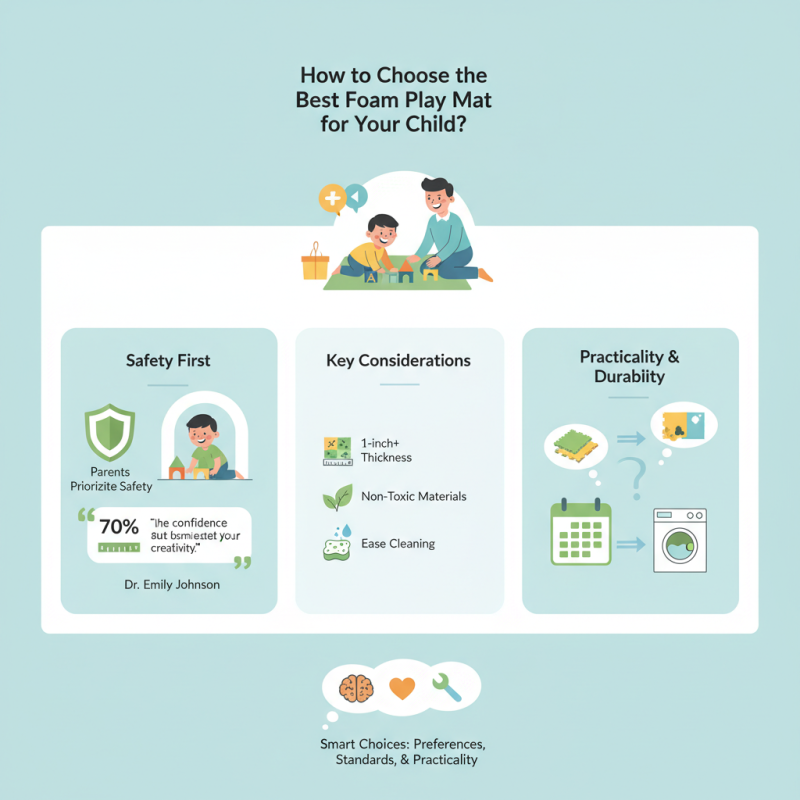
Choosing the right Foam Play Mat for your child is crucial for their development and safety. Industry reports indicate that 70% of parents prioritize safety features when selecting play mats. Notably, Dr. Emily Johnson, a leading expert in child safety products, states, "A safe play environment significantly boosts a child's confidence and creativity."
Foam Play Mats come in various designs, colors, and materials, making choices overwhelming. Experts suggest considering factors like thickness, non-toxic materials, and ease of cleaning. Research reveals that mats with at least 1-inch thickness reduce the risk of injuries during play. Furthermore, a good mat should be free from harmful chemicals to ensure a safe play space.
Parents often overlook maintenance and durability. A visually appealing mat is tempting, but is it easy to clean? Ultimately, selecting the right Foam Play Mat involves navigating personal preferences, safety standards, and practicality. Reflecting on these aspects can lead to smarter choices for your child’s playtime.
Understanding the Different Types of Foam Play Mats Available
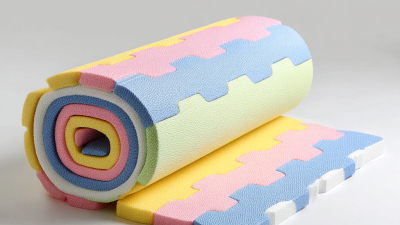
When selecting a foam play mat, understanding the types available is crucial. There are various options tailored to meet different needs. Solid foam mats offer cushioning and shock absorption. They are ideal for active toddlers, providing a soft landing during falls. Interlocking tiles are another popular choice. They allow customization of space and can be expanded as a child grows.
In recent industry reports, nearly 70% of parents prefer mats made from high-density foam. This material absorbs impact effectively and enhances safety. However, it’s essential to consider the potential for off-gassing. Some lower-quality foams can release VOCs, which may pose health risks. Looking for materials with certifications can mitigate this issue.
Versatile mats come in various textures and designs, appealing to both kids and parents. However, vibrant patterns can become overwhelming. Sometimes, simpler designs work better for focused play. Overall, evaluating each type and its implications on safety and play experience is vital. It's important to weigh the benefits against potential downsides.
Evaluating Safety Standards and Materials for Play Mats
When selecting a foam play mat, safety standards and materials should be your top priority. According to the Consumer Product Safety Commission, about 7,000 injuries related to inadequate play mats are reported annually. These incidents often arise from poor cushioning or the use of harmful materials. Thus, it's vital to check if the mat complies with safety regulations.
Look for mats made from non-toxic materials. Many mats claim to be BPA-free and phthalate-free, but not all are. A report from the American Academy of Pediatrics emphasizes the importance of using mats that meet regulatory standards for children’s products. Certified mats often undergo rigorous testing, ensuring they are safe for kids to play on.
Consider the thickness and density of the foam too. Mats should ideally be at least 0.5 inches thick to provide adequate protection against falls. Unfortunately, thinner mats can lead to injuries. Research indicates that a thicker mat reduces the risk of injuries by almost 30%. It's crucial to read reviews and seek information on the manufacturer's testing standards, as not all mats offer the same level of safety.
Comparing Different Foam Play Mat Materials
Considering Size and Thickness for Comfort and Space Needs
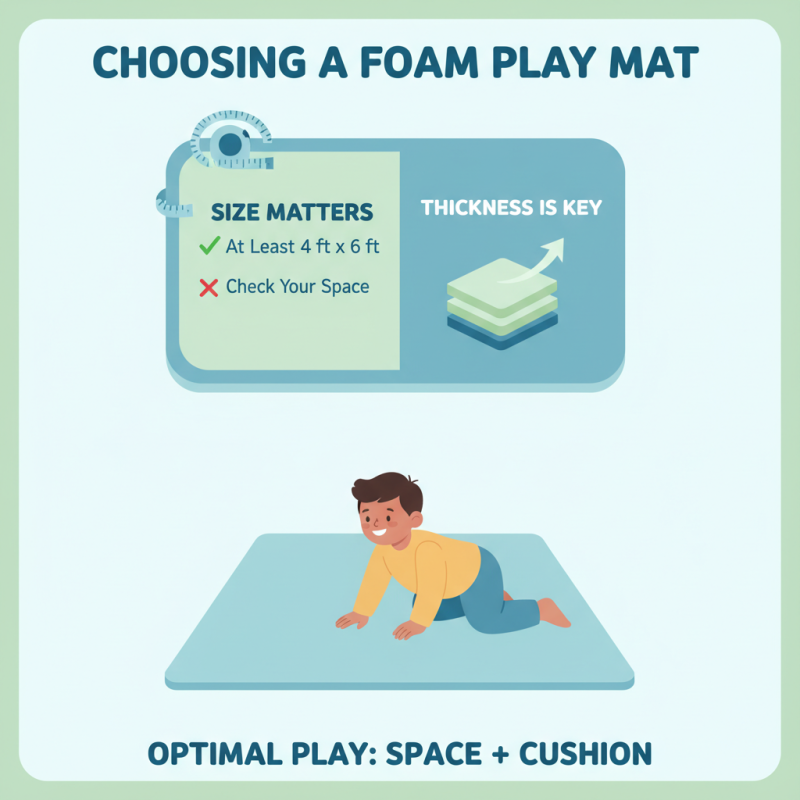
When choosing a foam play mat, size and thickness are crucial. The mat should comfortably fit your designated play area. Industry reports indicate that for optimal usage, a mat should be at least 4 feet by 6 feet. This size allows enough room for various activities. Larger mats offer the freedom for children to move without restrictions. However, larger may not always be better if space is tight.
Thickness plays a role in comfort and safety. A mat that is 1 inch thick can effectively cushion falls. Research shows that mats under 1 inch may not provide adequate protection. Many parents overlook this factor, thinking any foam mat will suffice. It’s important to consider how soft or firm the mat feels. A mat that’s too soft may not offer the necessary support, while one that’s too firm can be uncomfortable.
Reflecting on space needs is vital. Even the best play mat may become a clutter if the surrounding area is cramped. Think about ordering patterns and colors. Some designs better fit into small spaces. Ultimately, the key is balancing comfort, space, and safety for your child during play.
Exploring Design and Aesthetic Options for Child’s Play Environment
When designing a play area for your child, aesthetics matter. Soft colors and playful patterns can create a welcoming environment. Research shows that children respond positively to vibrant colors. They stimulate imagination and creativity. A study from the International Journal of Design highlights how engaging visuals can enhance cognitive development in early childhood.
Choosing a foam play mat involves balancing function and design. Look for mats that feature fun designs. Shapes, animals, or nature themes can inspire play. A survey from the Child Development Institute indicates that children prefer spaces that reflect their interests and personalities. Though parents often focus on safety features, the visual appeal shouldn't be overlooked. It's crucial to find the right balance.
Tips: Consider how the colors and designs align with your child's preferences. Involve them in the selection process. Let them choose their favorite colors or characters. This can enhance their sense of ownership in the space. A less-than-perfect design choice might prompt reflection. If your child ignores a mat in favor of the floor, reassess the aesthetic appeal. Design is more than just appearance; it influences engagement and playtime satisfaction.
Budgeting: Finding the Best Value for Quality Foam Play Mats
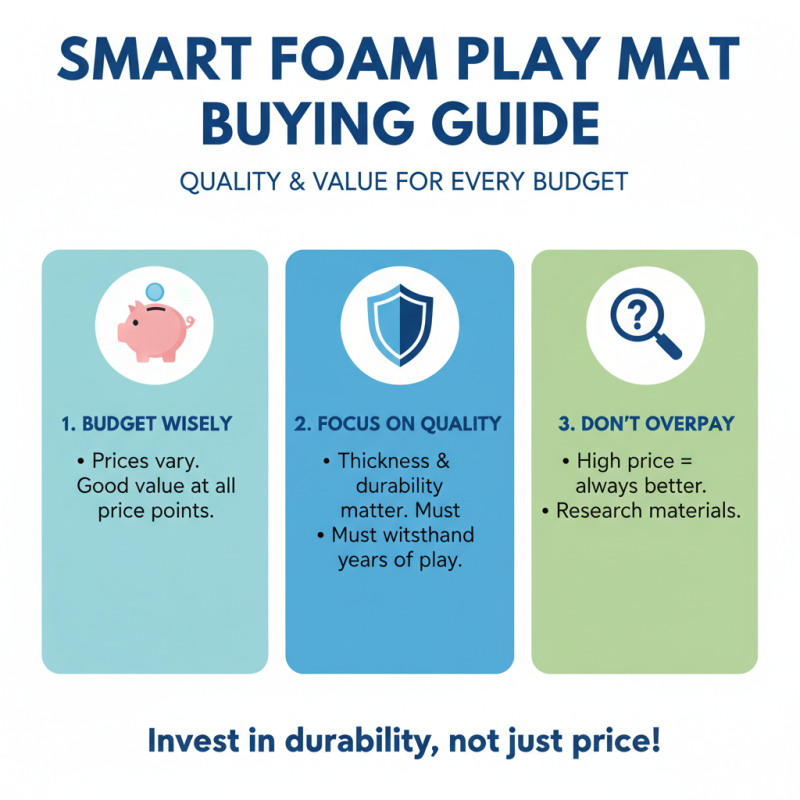
When choosing a foam play mat, budgeting is essential. Quality can vary widely, and good options exist at different price points. A high price tag doesn’t always guarantee better materials. Consider the thickness and durability of the mat. You'll want it to withstand years of play and not tear easily.
Tips: Look for mats that have non-toxic materials. Safety should always come first. Check for certifications that ensure the mat is free from harmful chemicals. Sometimes, the cheaper options may not meet safety standards. A well-made mat can save you money in the long run.
Evaluate your space before buying. Some mats come in interlocking pieces, while others are large sheets. Measure your play area to find the best fit. A mat that’s too small won’t provide enough space for your child. On the other hand, excess material can lead to tripping hazards.
Finding the best value means balancing cost and quality. Don't rush your decision. Research multiple options, and read reviews from other parents. Their insights can help you make a more informed choice. Remember that the perfect mat doesn’t exist; each has its pros and cons.