How to Choose the Best Rubber Yoga Mat for Your Practice?
Choosing the right Rubber Yoga Mat can significantly enhance your practice. With the yoga market projected to reach $37.46 billion by 2026, quality mats become essential. Studies show that 66% of yoga practitioners prioritize mat material for comfort and support.
A Rubber Yoga Mat offers excellent grip and durability. However, not all rubber mats are created equal. Some may contain harmful chemicals, impacting your health. It’s important to check for certifications, such as those from the Global Organic Textile Standard (GOTS), to ensure safety.
Investing in a quality Rubber Yoga Mat can be a game-changer. Consider aspects like thickness, texture, and eco-friendliness. Your choice affects your practice. A poorly chosen mat may lead to discomfort and hinder your progress. Take the time to reflect on what features matter most to you.
Understanding the Different Types of Rubber Yoga Mats Available
When selecting a rubber yoga mat, understanding the types available is crucial. There are natural rubber mats, which are eco-friendly and durable. They offer a sticky surface, ideal for grip during practice. However, these mats may not be suitable for those with latex allergies.
Synthetic rubber mats are another option. They are often more affordable and provide good cushioning. Yet, the longevity and grip might not match their natural counterparts. Some mats might feel slippery when wet, which can impact your practice.
Consider the thickness as well. Thicker mats offer more comfort but can be heavy and less stable. Thinner mats provide better stability but may compromise comfort for sensitive joints. Reflect on your needs and preferences to find the perfect balance.
Factors to Consider When Choosing a Rubber Yoga Mat
When selecting the best rubber yoga mat, several factors come into play. The thickness of the mat is crucial. Thicker mats offer more cushioning. However, they can be bulkier to carry. On the other hand, thinner mats may lack comfort but provide better stability. It's important to find a balance that suits your practice.
Texture and grip also matter significantly. A mat with a good grip helps prevent slipping during poses. Natural rubber usually provides excellent traction. Some mats may feel sticky but can become slippery when wet. Consider how sweaty your practice tends to be. Pay attention to the feel of the mat against your skin as well.
Durability is another point to think about. A quality mat should withstand daily use without wearing down. Some mats are easier to clean than others. Regular maintenance is key for longevity. Think about where you'll use it, at home or in a studio. These factors will inform your choice and enhance your practice. Finding the right mat requires a bit of trial and error. Don't be afraid to experiment.
Evaluating the Thickness and Texture of Your Yoga Mat
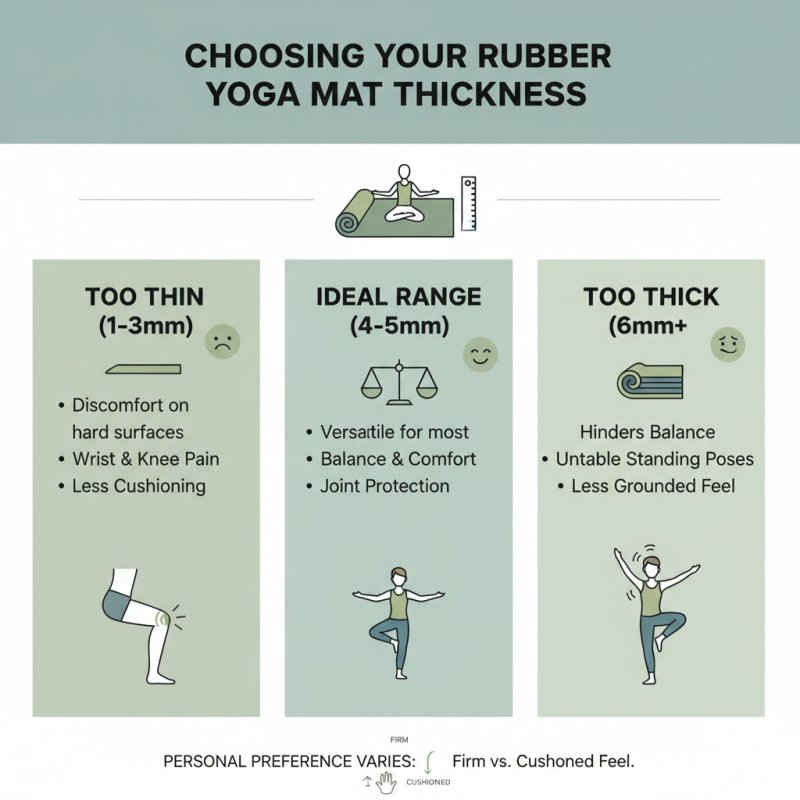
When selecting a rubber yoga mat, thickness plays a crucial role. A mat that is too thin may cause discomfort on hard surfaces. It can lead to wrist pain or knee strain during poses. On the other hand, a very thick mat can hinder balance in standing postures. Generally, a thickness of 4 to 5 mm is suitable for most practitioners. However, personal preference varies widely. Some prefer a firmer mat for stability, while others enjoy a cushioned feel.
Texture also significantly affects your practice. A mat with adequate grip prevents slipping during poses. This is especially vital in challenging asanas. The texture should give you confidence while moving between positions. A smoother surface may feel comfortable, but it might lack support during vigorous workouts. Consider your typical yoga style when focusing on texture. If you practice hot yoga, a more textured surface could enhance your grip. Reflect on your experiences to find what works best for you.
Sustainability and Eco-Friendliness in Rubber Yoga Mats
When choosing a rubber yoga mat, sustainability plays a key role. Many mats use natural or recycled rubber, making them eco-friendly options. These mats break down better than synthetic ones. This reduces landfill waste significantly. Look for certifications that indicate eco-friendly practices.
Consider your practice style. A thicker mat often provides more cushioning. However, thin mats can enhance stability. Balance is important here. It’s not always easy to find the perfect thickness. That can lead to discomfort over time.
Tips: Always check for certifications. Look closely at materials used. Ensure the mat is from sustainable sources. Take your time exploring. A good mat lasts longer and serves you better. Remember, your choice impacts the environment. It influences not just your practice, but also the planet's health.
Budgeting for Your Ideal Rubber Yoga Mat: Cost vs. Quality
When selecting a rubber yoga mat, budgeting is key. A high-quality mat can greatly enhance your practice. However, it often comes with a higher price tag. Consider your frequency of use and intensity of practice. If you practice daily, investing more makes sense.
Tips: Look for mats made from natural rubber. These tend to offer better grip and durability. Cheaper mats may wear out quickly, leading to more expenses over time. A mid-range option might meet your needs without breaking the bank.
Pay attention to thickness. Thicker mats offer cushioning, but they can be heavy and bulky. A thinner option can provide stability but may not be comfortable for all poses. Test different types before purchasing.
Remember that cost doesn’t always equal quality. Some budget-friendly mats provide excellent support. Reflect on your needs and preferences. Make sure your choice aligns with your practice style and long-term goals. Enjoy the journey of finding your ideal mat!