20+ years of production experience
Leave Your Message

Top 10 Eva Yoga Mat Manufacturers for Global Buyers?

Choosing the right Eva Yoga Mat manufacturer requires more than comparing prices or browsing polished factory websites. Global buyers need evidence of stable quality, production experience, and dependable communication. This guide examines ten manufacturers serving international markets, with attention to material consistency, surface grip, cushioning, and dimensional stability. These details matter when a mat must remain comfortable across humid studios, dry gyms, and frequent travel.

Each manufacturer is considered through practical purchasing factors. We look at EVA foam density, thickness options, edge finishing, odor control, printing quality, and packaging protection. Factory certifications, laboratory testing, export records, and customer feedback also deserve careful review. A low minimum order quantity may help smaller brands, while larger retailers may prioritize automated production and consistent batch output. Ask for samples.

A useful supplier should explain its material specifications clearly. It should also provide realistic lead times, inspection procedures, and replacement policies. Claims about eco-friendly materials require supporting documents, not attractive wording alone. No factory is perfect. Communication can still fail after a promising sample. Buyers should therefore request pre-production samples and confirm every detail in writing.

The following Top 10 Eva Yoga Mat Manufacturers list is designed as a practical starting point, not a final purchasing decision. It combines visible market experience with questions buyers should continue asking. Compare carefully, test personally, and consider the needs of your customers before signing a long-term agreement.
Top 10 Eva Yoga Mat Manufacturers for Global Buyers?

EVA Yoga Mats: Materials, Features, and Common Applications

EVA yoga mats use ethylene-vinyl acetate foam for flexible, lightweight cushioning. Their closed-cell structure resists water absorption and supports easier surface cleaning. Thickness usually ranges from about 4 to 10 millimeters. Thicker mats feel softer, while thinner mats offer better stability during balance poses. Surface texture also matters. A lightly patterned finish can improve grip when hands become damp. However, EVA is not perfect. Some low-density mats may dent under knees or lose shape after prolonged folding.

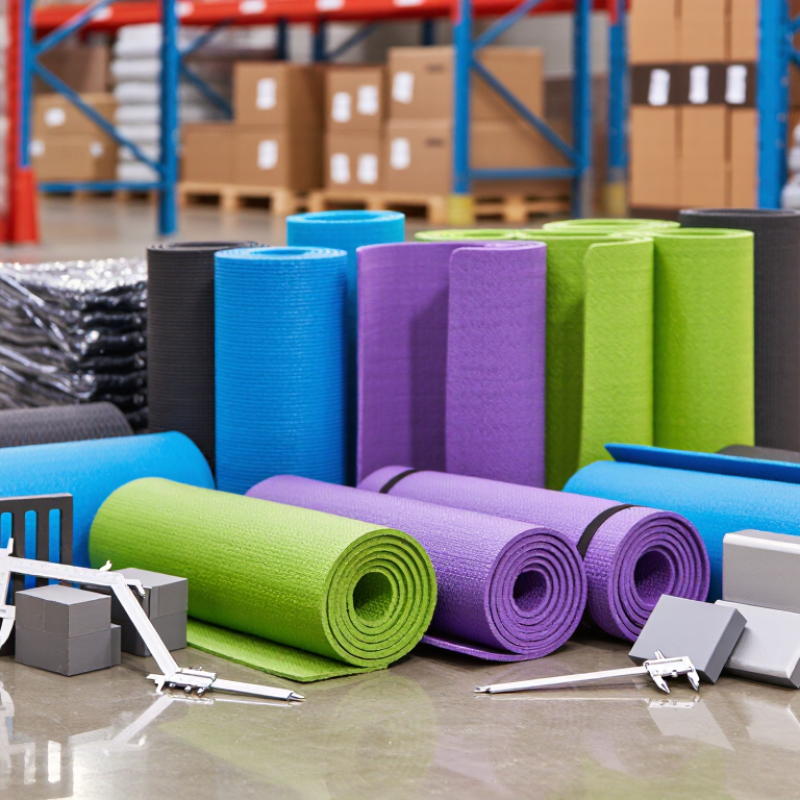
For global buyers, material testing should include thickness, density, tear strength, compression recovery, and odor. A sample can reveal issues that product photos hide. Check whether the foam feels even across the edges and center. Manufacturing experience also affects cutting accuracy, color consistency, packaging, and delivery reliability. EVA mats suit yoga studios, home practice, fitness classes, rehabilitation spaces, and outdoor sessions. Still, outdoor heat may accelerate surface wear. Storage conditions deserve attention.

Tips: Request samples from several manufacturers before placing a bulk order. Compare cushioning after repeated rolling and unrolling. Ask for clear material specifications and test records. A mild initial odor can occur, but strong or persistent smells deserve investigation. Do not choose only by the lowest price. A cheaper mat may create higher replacement costs.

How to Evaluate EVA Yoga Mat Manufacturers for Global Sourcing

Choosing an EVA yoga mat manufacturer requires more than comparing catalog photos. Grand View Research estimated the global yoga mat market at about USD 14 billion in 2023, with continued growth expected through 2030. That demand attracts capable factories and careless imitators.

Samples can deceive. Request EVA density, thickness tolerance, rebound, compression-set, and dimensional-stability data. Confirm whether tests came from an accredited independent laboratory.

Factory experience matters during global sourcing. Ask to inspect raw-material storage, mixing records, molding temperature logs, and final inspection procedures. A reliable supplier should trace each production batch to its EVA resin source.

Check odor and volatile-organic-compound testing, especially for mats used in enclosed studios. SGS industry guidance often recommends documented chemical screening, while ISO 9001-based quality systems support process consistency. Certification alone is not proof.

Commercial data also needs caution. Fortune Business Insights projects strong growth in the broader yoga-products sector, but market estimates differ because researchers define products differently. Numbers vary. Compare the report method before trusting a forecast.

I would test at least three production lots, not only one attractive sample. Measure curling after storage, surface grip after repeated cleaning, and print adhesion after abrasion.

Small defects become expensive claims. A manufacturer may promise low minimum orders, yet weak packaging can damage corners during ocean transport. The evaluation should include production controls, honest lead times, export documentation, corrective-action records, and realistic sustainability evidence. Some sourcing decisions remain imperfect; documented risk is better than confident guesswork.

Top 10 EVA Yoga Mat Manufacturers for International Buyers

International buyers need more than a polished catalog when choosing the Top 10 EVA Yoga Mat Manufacturers. Material consistency matters. EVA foam should provide stable cushioning, controlled rebound, and a reliable surface grip during repeated practice. Grand View Research projects the global yoga mat market to grow at about 5% annually through 2030. This growth increases supplier choice, but it also makes factory verification more important.

A practical Top 10 shortlist should examine EVA density, thickness tolerance, odor control, color stability, and production capacity. Buyers should request recent test reports, batch samples, and factory audit records. SGS and Intertek testing can help verify physical performance, restricted substances, and packaging claims. For international shipments, suppliers should understand REACH requirements in Europe and applicable consumer-product rules in the United States. Ask whether the factory uses virgin EVA, recycled content, or a blended formula. The difference may affect durability and smell.

Manufacturers with strong export experience usually provide clear carton dimensions, pallet plans, lead times, and replacement policies. Yet a large factory is not automatically the best partner. Small inconsistencies can appear between samples and mass production. I have seen color matching look perfect under showroom lights, then shift under warehouse lighting. That is easy to overlook. Buyers should inspect compression recovery after repeated loading, not only measure thickness. A useful supplier comparison also includes mold flexibility, minimum order quantities, private-label support, and communication speed. No audit predicts every problem. A second production inspection still makes sense.

Top 10 EVA Yoga Mat Manufacturers for International Buyers

Rank Manufacturer Profile Primary Production Region EVA Mat Formats Common Thickness Range Typical Density Range Surface & Structure Options Customization Capability Typical MOQ Standard Lead Time Export Readiness
1 Manufacturer Profile A East Asia Standard mats, travel mats, exercise rolls 4–15 mm 55–90 kg/m³ Textured Embossed Closed-cell Size, color, logo printing, packaging, custom embossing 500–1,000 pieces 25–40 days after approval Suitable for private-label and container orders; export documentation generally available on request
2 Manufacturer Profile B South Asia Basic EVA mats, fitness mats, children's activity mats 6–20 mm 60–100 kg/m³ Non-slip texture Two-color Foam laminate Color matching, die-cut shapes, printed cartons, barcode labels 1,000–2,000 pieces 30–45 days after order confirmation Well suited to wholesale distribution and mixed-size shipments
3 Manufacturer Profile C East Asia Eco-positioned EVA mats, foldable mats, wellness accessories 5–12 mm 65–95 kg/m³ Recycled-content options Fine texture Foldable Custom color palettes, recycled-content specifications, retail packaging 800–1,500 pieces 30–45 days Can support material declarations, laboratory testing, and sustainability documentation
4 Manufacturer Profile D Southeast Asia Large-format mats, studio mats, commercial exercise flooring 8–25 mm 70–110 kg/m³ High cushioning Water-resistant Roll format Custom dimensions, edge profiles, surface patterns, pallet packing 300–800 pieces 35–55 days Appropriate for gyms, yoga studios, hotels, and institutional buyers
5 Manufacturer Profile E East Asia Premium yoga mats, alignment mats, gift-set products 4–10 mm 75–105 kg/m³ Alignment lines Dual-layer Soft-touch finish Alignment graphics, sleeve packaging, branded inserts, color development 500–1,000 pieces 35–50 days Good fit for online retail, specialty stores, and premium product lines
6 Manufacturer Profile F South Asia Budget EVA mats, promotional mats, school and community-use mats 3–12 mm 45–80 kg/m³ Lightweight Basic embossing Bright colors Simple logo printing, standard color selection, polybag and carton packing 2,000–5,000 pieces 25–40 days Competitive for price-sensitive importers and promotional campaigns
7 Manufacturer Profile G Southeast Asia Foldable mats, modular mats, travel-friendly formats 6–18 mm 60–95 kg/m³ Tri-fold Interlocking Textured base Folding layouts, handle cut-outs, carrying straps, custom cartons 500–1,200 pieces 30–50 days Suitable for compact retail packaging and space-efficient logistics
8 Manufacturer Profile H East Asia Printed EVA mats, promotional designs, event merchandise 4–10 mm 55–90 kg/m³ Full-color print Embossed logo Matte finish Digital printing, repeat patterns, seasonal artwork, promotional packaging 300–800 pieces 25–45 days Useful for promotional agencies, events, subscription boxes, and campaign orders
9 Manufacturer Profile I South Asia Natural-tone mats, studio collections, coordinated yoga accessories 5–12 mm 60–100 kg/m³ Earth-tone colors Fine-cell foam Accessory matching Coordinated colors, product bundles, hangtags, retail-ready packaging 800–1,500 pieces 35–50 days Appropriate for boutique retailers, studios, wellness centers, and gift programs
10 Manufacturer Profile J Eastern Europe Short-run EVA mats, custom-cut mats, regional private-label production 5–15 mm 65–105 kg/m³ Custom cut High-grip texture Small-batch Short production runs, custom dimensions, multilingual labels, retail packaging 100–500 pieces 20–40 days Advantageous for regional buyers seeking shorter transit times and lower trial quantities
Buyer screening criteria include EVA material consistency, cushioning density, surface grip, thickness tolerance, customization flexibility, minimum order quantity, production lead time, packaging capability, and export documentation. Certification and test reports should be verified directly with each supplier before purchase.

Comparing Product Quality, Customization, Pricing, and Certifications

For global buyers, comparing the top ten EVA yoga mat manufacturers requires more than checking catalog photos. Product quality starts with material density, rebound, surface grip, and thickness tolerance. A 6-millimeter mat should not feel thinner at the edges. Ask for samples from current production, not only showroom pieces. Test odor after unpacking, measure recovery after rolling, and inspect tearing around carry holes. Small details matter. Uneven texture can affect balance during lunges.

Customization should be measured in practical terms. Suppliers may offer custom colors, embossed logos, printed patterns, packaging, and cut sizes. Confirm color references, artwork formats, mold charges, minimum order quantities, and sample approval times. Some suppliers promise flexibility, yet their factory may support only limited pigments or printing methods. That gap deserves attention. A written specification sheet can prevent costly surprises, especially when cartons, labels, and barcodes differ by market.

Pricing is not simply the unit quotation. Compare EVA grade, density, thickness, packaging, tooling, inspection, freight, duties, and payment terms. A cheaper mat can become expensive after odor complaints or replacement claims. Certifications also need careful review. Request valid test reports showing the product, material, laboratory, test date, and applicable market requirements. Depending on the destination, buyers may check chemical restrictions, heavy metals, packaging rules, or safety standards. Certificates without traceable documents are weak evidence. I would not treat every compliance logo as proof. My own comparison would score quality and documentation separately. This method is slower, but more reliable. Sometimes, hidden costs remain. Rechecking assumptions is necessary.

How to read this chart: This transparent 100-point procurement model reflects the relative importance commonly assigned by global buyers when comparing EVA yoga mat manufacturers.

Product quality covers material consistency, surface grip, durability, and dimensional stability. Certification requirements may include applicable chemical, product-safety, environmental, and quality-management documentation. Actual supplier performance, pricing, and certifications should be verified for each SKU and production site.

Key Questions to Ask Before Choosing a Manufacturing Partner

Top 10 EVA Yoga Mat Manufacturers for Global Buyers: Key Questions to Ask Before Choosing a Manufacturing Partner

Choosing an EVA yoga mat manufacturer requires more than comparing unit prices. Ask where the raw EVA comes from and whether its composition remains consistent. Request density, thickness, hardness, and dimensional tolerance data. A reliable factory should provide production samples, test reports, and clear inspection records. Check whether the mat stays flat after shipping. Roll memory can affect retail presentation.

Ask about minimum order quantities, mold fees, sampling charges, and realistic lead times. Can the factory produce your required colors without uneven shading? Can it print logos with clean edges? Review packaging details, including carton strength, moisture protection, and barcode accuracy. Confirm how defects are handled. A written replacement policy matters when hundreds of cartons arrive with warped edges.

Visit the facility when possible, physically or through a live video inspection. Observe material storage, cutting equipment, packing lines, and final checks. Request evidence of quality management and product safety testing relevant to your destination markets. Do not accept vague certificates. Verify issuing bodies and report dates independently. Communication also deserves testing. Send a detailed specification sheet and measure the response time. A low quote may hide weak control, slow revisions, or unstable supply. That lesson is easy to overlook. Even experienced buyers can prioritize price too early. A dependable partner answers difficult questions before receiving the purchase order.