Top Foam Floor Mat Options for Buyers Worldwide?
When it comes to choosing the right Foam Floor Mat, the options can be overwhelming. According to industry expert Dr. Emily Chen, "Quality foam mats enhance safety and comfort in any environment." This statement highlights the importance of selecting the right material for both functionality and peace of mind.
Foam Floor Mats are not just for kids; they serve various purposes in homes, gyms, and play areas. With a wide range of designs, thicknesses, and densities available, finding the perfect mat can be a challenge. Different needs call for different solutions. The durability and ease of cleaning are crucial factors to consider when making a choice.
Despite the plethora of options, many individuals still overlook the impact a high-quality Foam Floor Mat can have. Users often regret not investing in better mats after experiencing discomfort or slips. Reflecting on your specific needs is essential for making an informed decision. The perfect Foam Floor Mat should combine comfort, safety, and style for optimum user experience.
Essential Features to Consider When Choosing Foam Floor Mats
When selecting foam floor mats, several key features demand attention.
Durability is paramount. Mats made from
high-density foam tend to withstand wear better.
Reports indicate that high-density mats can last up to five years under regular use, while lower-density
options may only last about two years. This highlights the
importance of a wise investment.
Another essential feature is thickness. Mats typically range from half an inch to two inches thick.
Thicker mats provide better cushioning, which is beneficial for activities like yoga or exercise.
However, they may also require more space. Consider your specific needs and the type of activities you'll engage
in to make the best choice.
Tips: Always assess the surface where you’ll use the mats.
Smooth surfaces require different mat properties than carpets.
Also, check for non-toxic certifications.
Mats made with safe materials can significantly enhance indoor air quality.
Color and design are also factors. While aesthetic choices may seem superficial, they can impact the environment's
overall feel. A cluttered design can distract, while a
minimalist approach promotes focus. Remember, choosing the right foam floor mat is not just about
functionality but also the experience it creates in your space.
Types of Foam Floor Mats: An Overview of Options Available
Foam floor mats come in various types, catering to different needs and environments. The market offers interlocking mats, roll-out mats, and puzzle mats, each designed for unique applications. Interlocking mats are popular for home gyms due to their easy assembly and stability. In play areas, puzzle mats can provide a soft landing for children. They add color while ensuring safety.
Industry reports indicate that the global foam flooring market is projected to grow significantly. The growth rate is expected to be around 5.6% from 2021 to 2028. This rise points to an increasing awareness of safety and comfort. Many buyers desire mats that provide insulation and cushioning. It is crucial to select mats that are easy to clean and maintain, especially in high-traffic zones.
Though foam mats offer great benefits, not all types are suitable for every setting. Environmental concerns arise with some materials used in foam production. Additionally, certain designs may wear out quicker than expected. Buyers should research materials and durability before making a purchase. Consideration of these details can significantly impact the longevity and functionality of foam floor mats.
Top Foam Floor Mat Options for Buyers Worldwide
| Type of Foam Floor Mat |
Thickness (inches) |
Material |
Recommended Use |
Water Resistance |
| Interlocking Foam Tiles |
0.5 |
EVA Foam |
Playrooms, Gyms |
Yes |
| Puzzle Foam Mats |
0.4 |
PE Foam |
Children's Rooms, Exercise |
Yes |
| Carpet Foam Mats |
0.75 |
Foam with Carpet Top |
Living Rooms, Offices |
No |
| Exercise Foam Mats |
1.0 |
NBR Foam |
Yoga, Pilates, Fitness |
Yes |
| Cushioned Foam Rolls |
0.5 |
PVC Foam |
Dance Studios, Gymnastics |
Yes |
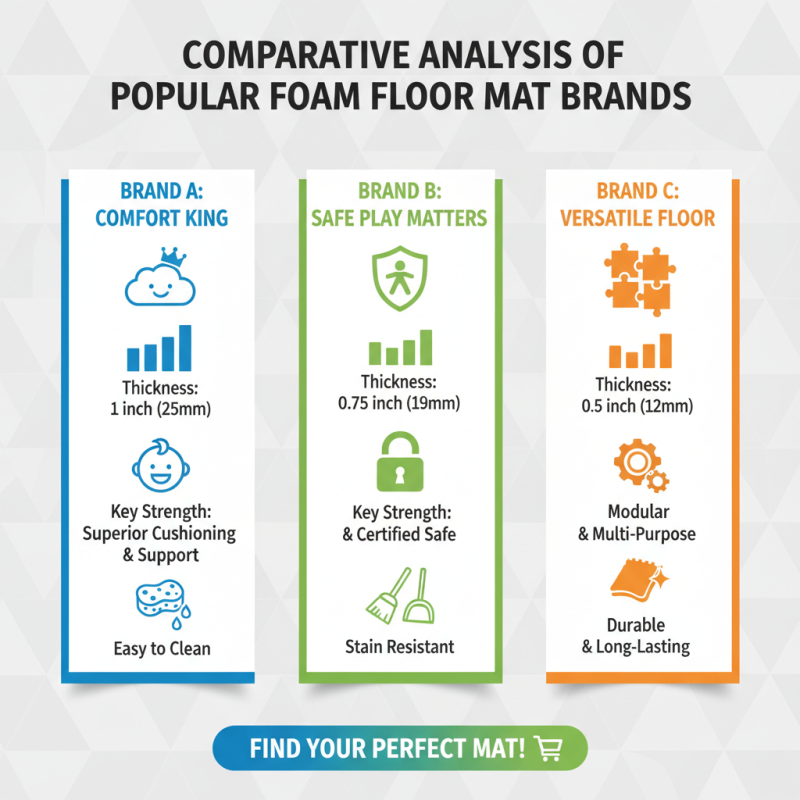
Comparative Analysis of Popular Foam Floor Mat Brands
When considering the best foam floor mats, the market offers a variety of options. These mats are designed for comfort, safety, and versatility. Users often seek out features such as thickness, material quality, and ease of cleaning. Each brand exhibits unique strengths that cater to different needs.
Some brands offer mats with superior grip, making them ideal for workout spaces. Others focus on softer textures for children's play areas, ensuring a safer environment. The durability of foam mats varies widely. It is wise to read user reviews to gauge how products hold up over time. While one brand may excel in aesthetics, another may outperform in functionality.
There are also concerns regarding chemical safety in foam products. Many consumers prioritize non-toxic materials for peace of mind. However, not all brands clearly disclose ingredient information. This lack of transparency can be frustrating and creates a need for consumers to research thoroughly. Finding the right balance between quality and safety remains a challenge in this competitive market.
Durability and Maintenance Tips for Foam Floor Mats
Foam floor mats are popular for their comfort and versatility. However, choosing the right mat is just the beginning. Proper maintenance is crucial for long-term use. Regular cleaning helps prevent dirt accumulation. A simple vacuum or damp mop can keep your mats fresh. It's also important to use a gentle(cleaner) to avoid damaging the foam material.
Durability varies with quality. High-density foam is usually more resistant to wear and tear. Sunlight can also affect foam, causing fading or brittleness. Consider placing mats away from direct sunlight to prolong their lifespan. Regularly checking for tears or signs of wear is necessary. Early intervention can save you from larger expenses down the road.
Don’t be surprised if you encounter a bad odor at times. This can happen with foam mats, especially when new. Airing them out in a well-ventilated space usually helps. Also, ensuring complete dryness after cleaning is vital. Moisture can lead to mold growth, compromising both hygiene and safety. Make these points a part of your routine for the best results.
Investment Value: Cost-Benefit Analysis of Foam Floor Mats
When considering foam floor mats, a cost-benefit analysis becomes essential. These mats provide a variety of benefits, from cushioning underfoot to sound insulation. Many buyers find themselves evaluating the upfront investment versus the long-term savings on flooring and maintenance. High-quality foam mats can reduce injuries in active environments, such as playrooms or gyms. This protective feature can save on medical costs related to slips and falls.
However, not all foam mats are created equal. Some may wear out quickly, leading to additional costs for replacements. This raises the question of durability. Cheaper options might seem tempting at checkout, but they could fail to meet expectations over time. It’s crucial to assess product reviews and performance ratings. Look for user experiences that highlight both good and bad aspects. This insight can guide you to make a more informed choice.
Investing in foam floor mats should also consider their versatility. They can be used in various settings, from home gyms to children's play areas. This adaptability adds to their value. However, if the mats do not fit well into your specific needs, the investment may falter. Reflecting on how and where you will use the mats can shape a smarter buying decision.
Top Foam Floor Mat Options for Buyers Worldwide