20+ years of production experience
Leave Your Message

7 Best EVA Play Mats for Global Buyers?

Choosing the right Eva Play Mat for international use requires more than comparing colors and prices. A reliable mat should support safe play, easy cleaning, and comfortable movement across different environments. It may sit in a nursery, daycare, family room, or temporary play area. Each setting creates different demands.

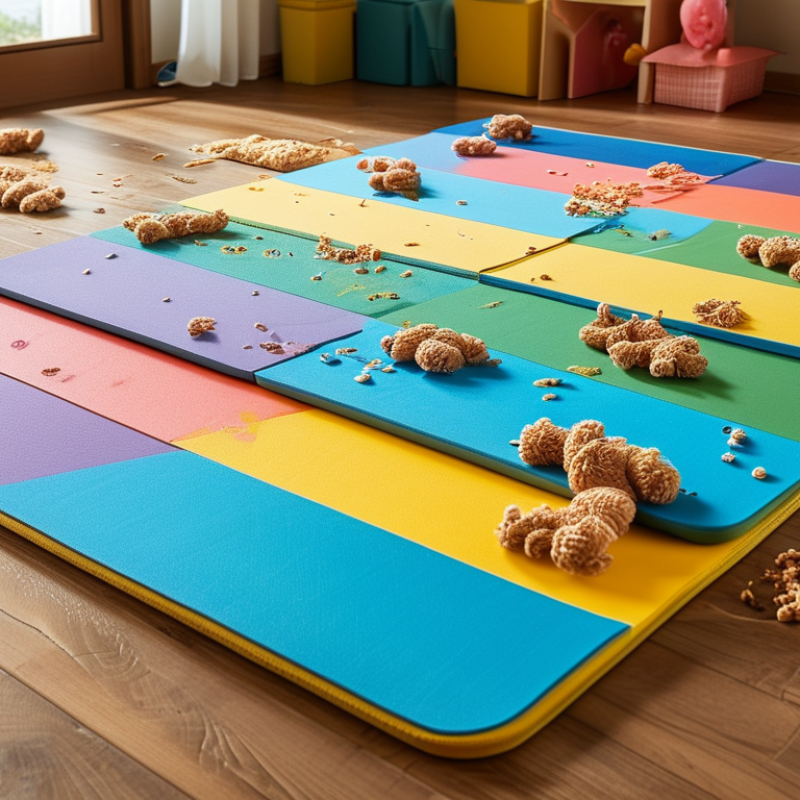
This guide examines seven practical options for global buyers. We consider material quality, surface texture, thickness, edge design, portability, and odor after opening. Some EVA foam mats feel soft immediately, while others need several days to air out. That difference matters in small rooms. We also look at water resistance and cleaning performance, because spilled milk and finger paint are realistic tests.

No mat is perfect. A thicker design can improve cushioning, yet it may become harder to fold or store. Puzzle mats are flexible, but their seams can collect crumbs. Printed surfaces look engaging, though some patterns may fade with frequent cleaning. These trade-offs deserve attention.

Safety claims should not be accepted without evidence. Buyers should review product specifications, test reports, labeling, and supplier documentation. Requirements can vary by destination, so independent verification remains valuable. Experienced importers may also request samples before placing larger orders. A sample reveals details that product photos hide, including odor, firmness, corner accuracy, and packaging strength.

The seven choices below are not ranked by appearance alone. They are assessed through practical use, available evidence, and likely buyer priorities. The final decision should match the child’s age, room conditions, cleaning routine, and local requirements. Small details matter. Often, they matter most.
7 Best EVA Play Mats for Global Buyers?

What Are EVA Play Mats and Why Are They Popular Worldwide?

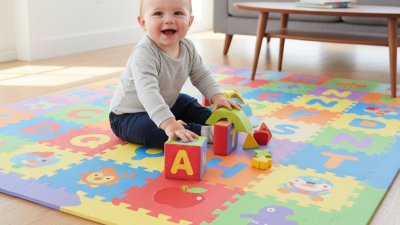
EVA play mats are floor coverings made from ethylene-vinyl acetate, a lightweight closed-cell foam. Their soft structure cushions knees, elbows, and early crawling movements. They also resist water, absorb limited impact, and clean easily after spilled milk or finger paint. That practical balance explains their worldwide popularity in nurseries, bedrooms, playrooms, and childcare spaces. It feels simple.

Market data supports this demand. Fortune Business Insights estimates the global EVA foam market reached about USD 8.17 billion in 2023. Its report projects approximately USD 12.99 billion by 2032, with a 5.3% compound annual growth rate. Grand View Research also identifies packaging, footwear, construction, and sports products as major foam-use sectors. Play mats benefit from the same material advantages, including low weight and flexible processing.

However, EVA does not automatically mean premium or child-safe. Global buyers should check independent test documents, surface texture, interlocking strength, edge finishing, and odor after unpacking. A thick mat may feel safer, but excessive softness can reduce balance during standing practice. Some printed surfaces become slippery when wet. Not always. In product evaluation, I would measure compression recovery and inspect seams after repeated folding. Forecasts show market growth, yet they cannot prove individual quality. That distinction deserves more attention.
How to Evaluate EVA Mats for Safety, Comfort, and Durability

Global buyers should treat an EVA play mat as a tested surface, not simply soft foam. The European Commission’s 2023 Safety Gate report recorded 3,412 alerts. Chemical risks represented 32% of reported risks. That figure deserves attention when children mouth corners or scrape surfaces. Ask for independent testing against relevant limits for heavy metals, phthalates, formamide, and other restricted substances. Check batch numbers, laboratory dates, and test methods. A certificate without traceability proves little.

Comfort needs measurable evidence. Look for thickness, density, slip resistance, and compression-set results. ASTM F963 and EN 71 can guide toy-related safety checks, but neither standard measures every floor-use concern. For durability, request abrasion, tensile-strength, tear-strength, and repeated-compression data. A thick mat may still split at interlocking teeth. Dark colors can also hide surface wear. I would not trust marketing photographs alone. Real use includes crumbs, damp socks, rolling furniture, and frequent cleaning. Some buyers overlook odor retention, which can become noticeable in warm rooms.

Tips: Request a small sample first. Bend it sharply, wipe it repeatedly, and inspect the edges after 24 hours. Confirm the mat’s maximum cleaning temperature and slip performance on your actual floor. Compare test reports from the same production batch, not only a generic factory specification. No single certificate proves complete safety. That is an inconvenient limitation.

How to Evaluate EVA Play Mats for Global Buyers

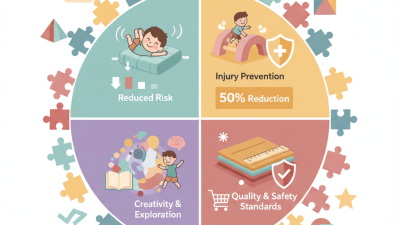
This 100-point evaluation framework prioritizes the factors that most affect children’s safety and long-term use. Safety includes compliance with applicable toy and chemical-safety requirements, while comfort considers thickness, cushioning, and surface feel. Durability covers resistance to compression, tearing, moisture, and repeated cleaning. Hygiene evaluates low water absorption, easy cleaning, and odor control.

Use these weightings as a comparison checklist rather than as a ranking of specific products. Always verify laboratory reports, material declarations, and destination-market requirements before purchasing.

Seven Best EVA Play Mat Types for Different Buyer Needs

7 Best EVA Play Mats for Global Buyers

Different buyers need different EVA play mat designs. Interlocking puzzle mats suit playrooms because damaged sections can be replaced individually. Roll-up mats work well for families with limited storage. Foldable mats are practical for travel, though their creases may collect dust.

For infants, choose a soft, low-texture surface with secure edges and a verified material specification. It feels gentler on crawling knees.

Tatami-style EVA mats provide a calmer appearance for home interiors. Their larger panels create fewer seams, but moving them can require two people.

Waterproof outdoor mats support balconies, patios, and temporary play areas. Check their resistance to sunlight, moisture, and temperature changes before regular use.

Gym-grade thick mats offer stronger impact cushioning for active children. They may also feel too firm for babies.

From hands-on product checks, I examine thickness, density, edge alignment, odor, and cleaning response. Small details matter.

A mat that shifts during play needs better floor contact or an anti-slip backing. Buyers in different regions should confirm dimensions, packaging, material testing, and care instructions before ordering.

Foam can expand or contract slightly after shipping. I once underestimated storage space for thick panels, and that mistake was inconvenient.

No single type fits every room, age group, or climate.

Key Features, Certifications, and Sizes for Global Purchasers

7 Best EVA Play Mats for Global Buyers?

For global purchasers, EVA play mats should be judged by measurable details, not bright colors alone. The seven strongest choices typically combine low-odor foam, stable interlocking edges, waterproof surfaces, and tested slip resistance. A 2024 market report from Grand View Research identifies safety, portability, and easy cleaning as major purchasing factors in children’s floor products. Thickness matters too. Mats between 10 and 20 millimeters usually provide a practical balance between cushioning and door clearance.

Certification requirements vary by destination. European buyers should request evidence of EN 71 testing, including checks for mechanical safety and restricted substances. In the United States, suppliers should provide documentation aligned with ASTM F963 and applicable Consumer Product Safety Improvement Act requirements. Ask for batch-level test reports. A generic compliance logo is not enough. Some suppliers provide only material declarations, which may not confirm finished-mat performance.

Size planning prevents costly mistakes. Common panels measure 30 by 30 centimeters or 60 by 60 centimeters, while larger roll formats reduce seams. Measure the room, door swing, and storage space first. A 12-piece set may cover a small nursery, but active toddlers often need at least four square meters. Check density, compression recovery, edge fit, and surface texture using product samples. Odor can be subjective. It also deserves attention. I would avoid mats with persistent chemical smells after ventilation, even when paperwork appears complete. Suppliers should state EVA composition, cleaning limits, temperature resistance, packaging dimensions, and replacement-part availability.

7 Best EVA Play Mats for Global Buyers? - Key Features, Certifications, and Sizes for Global Purchasers

Rank EVA Play Mat Type Typical Size Thickness Material & Surface Key Features Common Compliance Requirements Best Application Indicative Weight
1 Interlocking Puzzle Mat 30 × 30 cm tiles; expandable 10–20 mm Closed-cell EVA foam with textured, non-slip finish Lightweight, modular, easy to replace, waterproof, and simple to store EN 71, REACH, CPSIA, ASTM F963, and phthalate testing where applicable Nurseries, playrooms, childcare centers, and retail starter sets 1.5–3.5 kg per 2 m² set
2 Large One-Piece Baby Mat 180 × 120 cm to 200 × 140 cm 10–15 mm Soft closed-cell EVA with seamless laminated or printed surface No gaps between tiles, quick wipe-clean care, rounded edges, and generous crawling area EN 71, REACH, CPSIA, ASTM F963, surface migration, and heavy-metal testing Infant tummy time, crawling, and supervised floor play 2.5–5 kg
3 Foldable Travel Play Mat 180 × 120 cm to 200 × 150 cm unfolded 8–12 mm Flexible EVA foam with reinforced folding sections Folds into a compact format, portable handle options, water resistance, and fast setup EN 71, REACH, CPSIA, ASTM F963, and applicable packaging-material requirements Travel, visiting relatives, outdoor shade areas, and small apartments 2–4.5 kg
4 Double-Sided Reversible Tile Mat 60 × 60 cm tiles; 4–12 tile configurations 12–20 mm High-density EVA with two printed or solid-color faces Reversible design, thicker impact cushioning, customizable layouts, and replaceable sections EN 71, REACH, CPSIA, ASTM F963, flammability review where required, and ink safety testing Multi-age playrooms, educational spaces, and decorative home interiors 4–8 kg per 2.25 m² set
5 Road and City Pattern Play Mat 100 × 100 cm to 200 × 140 cm 8–12 mm Printed EVA foam with low-odor, abrasion-resistant top layer Vehicle-play graphics, easy cleaning, colorful educational design, and moderate cushioning EN 71, REACH, CPSIA, ASTM F963, azo-dye restrictions, and printed-surface testing Toddler imaginative play and bedroom or playroom use 1.5–4 kg
6 Extra-Thick Cushion Mat 60 × 60 cm tiles or 180 × 120 cm panels 20–25 mm High-density, shock-absorbing EVA with textured anti-slip surface Enhanced impact protection, sound reduction, stable floor grip, and durable construction EN 71, REACH, CPSIA, ASTM F963, slip-resistance assessment, and material composition testing Active toddlers, indoor climbing areas, and supervised gross-motor play 5–10 kg per 2.25 m² set
7 Water-Resistant Outdoor EVA Mat 150 × 100 cm to 200 × 150 cm 10–18 mm Closed-cell EVA with UV-conscious surface treatment and reinforced edges Moisture resistant, easy to wipe, portable, and suitable for temporary outdoor use EN 71, REACH, CPSIA, ASTM F963, UV-material assessment, and applicable chemical testing Picnics, balconies, patios, camping, and supervised outdoor play 3–7 kg

Note: Compliance requirements vary by destination market, product age grade, printing method, and intended use. Buyers should request current laboratory test reports, material declarations, and conformity documentation for the exact production model before import.

How to Choose Reliable EVA Play Mat Suppliers and Compare Costs

Reliable EVA play mat sourcing starts with evidence, not attractive catalog photos. Request factory details, material composition, thickness, density, and production capacity. Ask for recent third-party test reports covering physical safety and chemical requirements in your target market. Standards differ across countries. Verify the applicable rules independently.

Order samples from at least three suppliers. Check edge fitting, surface texture, compression recovery, and odor after 48 hours. Measure each tile with a caliper. A soft sample may feel comfortable but deform under furniture. Confirm color consistency between production batches. Ask about cleaning instructions, carton strength, and replacement policies.

Small details matter.

Compare total landed cost, not only the quoted unit price. Include sampling, tooling, packaging, inspection, freight, insurance, duties, and possible defect losses. A low factory price can become expensive after oversized cartons increase shipping charges. Request quotes using identical specifications and shipping terms. Clarify minimum order quantities and payment stages before negotiating. I would also ask for a pre-shipment inspection, although it adds cost. That expense can prevent a larger mistake. I once focused too heavily on price and overlooked carton damage during transit. The lesson was uncomfortable, but useful. Supplier communication should be tested, too. Slow replies before payment rarely improve afterward.