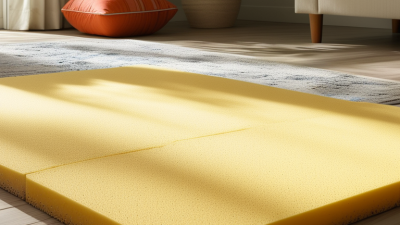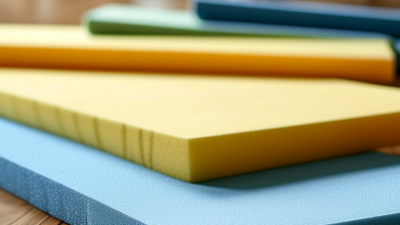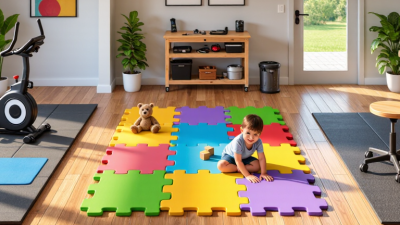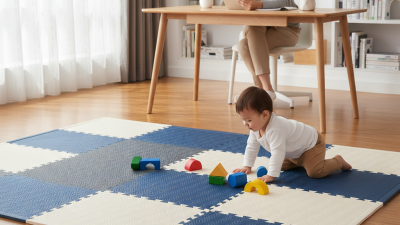
Choosing the right Large Foam Mat is not simply a matter of picking the biggest size. The space, activity, flooring, and users all influence the decision. A playroom needs soft cushioning and easy cleaning. A home gym may need stronger density and better resistance to compression.
The World Health Organization’s Guidelines on Physical Activity and Sedentary Behaviour recommend 150–300 minutes of moderate activity weekly for adults. That guidance makes safe, comfortable exercise surfaces increasingly practical at home. A Large Foam Mat can define a workout zone, reduce contact with cold floors, and soften pressure during stretching or floor exercises. However, thickness alone does not guarantee protection. Foam density, surface grip, edge stability, and moisture resistance matter just as much.
Look at the floor beneath it. Uneven tile may require a thicker, firmer design. Smooth wood may need a non-slip backing. ASTM F1292 provides impact-attenuation testing guidance for relevant protective surfacing, although not every household mat is certified to that standard. Check the manufacturer’s test information carefully.
Measure the room twice.
A mat that covers too much space can block doors, vents, or storage areas. A modular design may solve awkward corners, but poorly joined panels can separate during movement. Real use reveals weaknesses. Some mats smell strongly after unpacking, while others show dents beneath equipment within weeks. Those details deserve attention, even when product images look convincing.
This guide compares practical features, safety considerations, maintenance needs, and space-specific performance. The best choice is not the thickest option. It is the one that fits the room, supports the activity, and remains dependable over time.
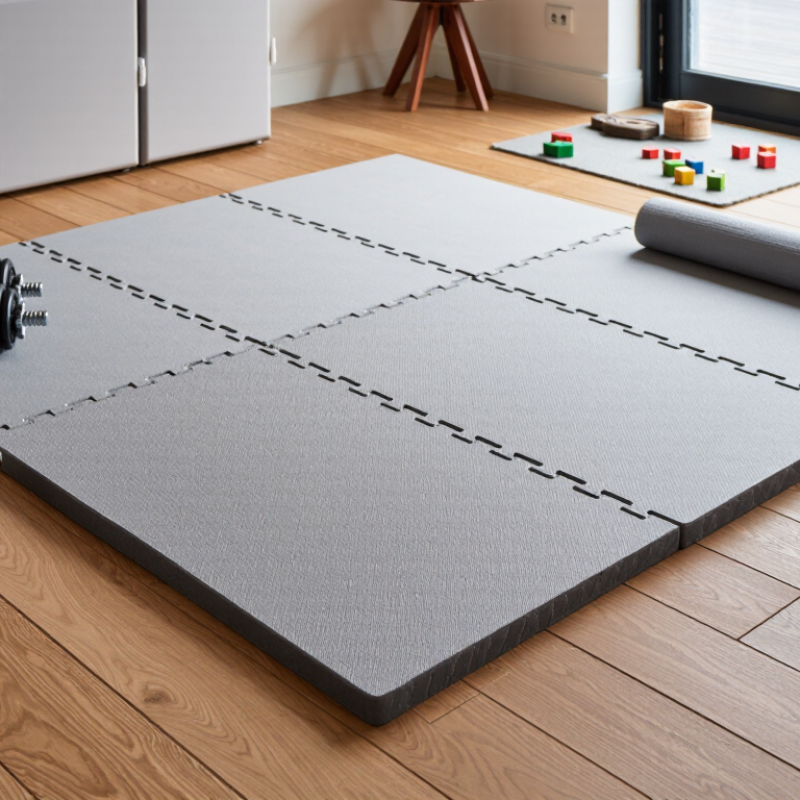
Before comparing large foam mat sizes, define the space in practical terms. Measure the usable floor, not the room’s full dimensions. Leave clear paths around doors, shelves, and equipment. A 3-by-6-foot mat may fit a child’s stretching area, but it can feel cramped beneath a bench and moving adult. Draw the activity zone with masking tape. It reveals awkward gaps quickly.
The 2020 World Health Organization guidelines recommend adults complete 150–300 minutes of moderate activity weekly. That supports planning a comfortable movement area, not merely covering the floor. The 2024 ACSM Worldwide Survey also identifies functional fitness and free-weight training among prominent fitness trends. These activities need more reach and repositioning space. Add the user’s height, arm span, and equipment footprint, then include a movement buffer. Two extra feet can matter.
Load needs require separate attention. Estimate total weight, then inspect concentrated pressure from feet, wheels, benches, or dropped objects. ASTM F1292 evaluates impact attenuation for playground surfacing, but it does not automatically prove suitability for every exercise room. Check the mat’s published compression and recovery data. I have seen oversized mats fail because the surface was too soft for unstable equipment. Bigger is not always better. Reconsider the choice after testing a sample under real load.
Compare the available floor area first, then match the mat size and thickness to the activity, expected impact, and equipment footprint. Coverage figures below are calculated from the stated mat dimensions.
| Mat Size | Approx. Metric Size | Coverage | Recommended Clear Space | Minimum Thickness Guidance | Load / Impact Need | Suitable Uses | Planning Considerations |
|---|---|---|---|---|---|---|---|
| 4 × 6 ft | 1.22 × 1.83 m | 24 sq ft 2.23 m² |
Allow at least 6–12 in on each side for safe movement. | 1/2 in for low-impact activities; 3/4 in for added comfort. | Light | Stretching, yoga, children’s play, kneeling, and small floor-protection areas. | Easy to move and store; best when the usable floor area is limited. |
| 4 × 8 ft | 1.22 × 2.44 m | 32 sq ft 2.97 m² |
Keep a minimum 12 in perimeter where users may step or move off the mat. | 1/2–3/4 in for general use; choose 1 in for more cushioning. | Light to Moderate | Home exercise, mobility work, play areas, pet spaces, and protective flooring under benches. | The long format suits narrow rooms, hallways, and rectangular exercise zones. |
| 6 × 10 ft | 1.83 × 3.05 m | 60 sq ft 5.57 m² |
Plan for approximately 1–2 ft of surrounding clearance for active movement. | 3/4 in for bodyweight exercise; 1 in for repeated floor contact. | Moderate | Functional training, children’s activity zones, martial-arts drills, and multi-person floor exercises. | Provides a larger continuous surface while remaining manageable for many rooms. |
| 8 × 12 ft | 2.44 × 3.66 m | 96 sq ft 8.92 m² |
Leave 2 ft or more around the active area when users may roll, jump, or change direction. | 3/4–1 in for moderate impact; thicker specialty flooring may be required for falls. | Moderate to High | Large playrooms, home gyms, tumbling practice, group stretching, and equipment zones. | Check doorways, stair turns, and storage space before selecting a single-piece mat. |
| 10 × 20 ft | 3.05 × 6.10 m | 200 sq ft 18.58 m² |
Reserve at least 2–3 ft around the perimeter for circulation and equipment access. | 1 in or greater for frequent impact; use activity-specific certified flooring when required. | High | Training studios, large children’s areas, rehearsal spaces, and broad equipment layouts. | Best for dedicated rooms; verify floor levelness, ventilation, delivery access, and anchoring needs. |
| Custom or Interlocking Layout | Built from multiple panels | Match the room footprint | Measure the usable zone and subtract fixed furniture, columns, doors, and required walkways. | Use the same thickness across the full activity area to avoid uneven transitions. | Varies by Activity | Irregular rooms, wall-to-wall coverage, commercial training areas, and expandable installations. | Interlocking seams improve layout flexibility, but the subfloor must be clean, dry, flat, and stable. |
Important: Foam mats do not have one universal load rating. Actual performance depends on foam type, density, thickness, support conditions, contact area, and whether the load is static or moving. For heavy racks, concentrated equipment feet, repeated drops, or professional impact training, confirm the manufacturer’s compression and impact specifications before installation.
Choosing a large foam mat starts with density, but density alone can mislead. EVA usually offers balanced cushioning, with common supplier ranges near 30–100 kg/m³. XPE is lighter, often around 25–60 kg/m³, and suits temporary play areas or travel. Rubber foam commonly reaches 80–200 kg/m³, giving stronger compression resistance for gyms and workshops. Actual values vary by formulation, so request a test sheet.
Durability depends on pressure, temperature, moisture, and surface friction. EVA resists everyday dents reasonably well, while XPE may compress sooner under heavy furniture. Rubber foam generally handles repeated impact better, but it can feel firmer and cost more. In practical inspections, edge tearing often appears before surface wear. That detail is easy to miss. The U.S. EPA reports that indoor pollutant levels can be two to five times higher than outdoor levels, making emissions testing important in children’s rooms and enclosed studios.
Tips: Ask for density, compression-set, and abrasion results. For VOC control, look for testing under CDPH Standard Method v1.2 or ISO 16000 procedures. “Low VOC” alone proves little. Check curing time, ventilation guidance, and odor after 72 hours. A strong smell does not automatically mean danger, but ignoring it is careless. For wet areas, inspect seams and backing, because trapped moisture can shorten service life. I would also compare thickness after compression, not only the advertised thickness.
Choosing a large foam mat starts with the expected fall, not the room’s empty dimensions.
EN 1177 focuses on impact attenuation, measured through head injury criterion and acceleration tests. These results help identify a critical fall height, meaning the greatest tested fall height with acceptable impact performance. Thickness alone cannot prove safety. A thick mat may perform poorly if its foam density, surface structure, or supporting floor differs from the tested setup.
Measure the highest accessible point where a child could fall, such as a platform edge or climbing feature. Choose surfacing with an EN 1177 test result meeting or exceeding that fall height. Do not guess. Ask for the test date, product configuration, and installation conditions. Details matter. A mat tested on concrete may behave differently on timber, tile, or another foam layer. Check seams, gaps, and curling edges during routine inspections. I have seen small openings become trip points after repeated movement.
For a playroom, a low-height mat may suit activities close to the floor. Higher equipment needs independently verified impact data, not a guess based on thickness. Keep the mat flat and dry. Replace sections showing permanent compression, tears, or hardened foam. EN 1177 testing supports a careful decision, but it does not replace supervision or proper equipment design. I would recheck the fall height whenever furniture or play features change. That step is easy to miss.
Choosing a large foam mat begins with the certificate, not the color or thickness. If children may use it as a play surface, ask whether the product falls within ASTM F963 requirements under CPSIA. CPSC estimated 231,000 toy-related emergency-department injuries among children in 2023. That figure is not mat-specific, but it shows why impact, small parts, lead, and phthalate controls deserve attention. Request recent laboratory reports, not only a printed compliance statement.
Slip resistance needs equal scrutiny. Ask for the test method, surface condition, footwear type, and wet or dry results. ASTM F609 may help assess static friction when its scope fits the product. A textured top can feel secure, yet dust between grooves may change traction. Test it barefoot and with common socks. Slightly awkward, but realistic. Check curled edges too; they can create a trip hazard before sliding becomes the problem.
Fire documentation is easy to overlook in a soft, oversized mat. NFPA’s Fire Loss in the United States During 2023 estimated about 1.5 million fires nationwide, so placement near heaters, kitchens, and exit paths deserves careful review. Ask whether the foam and any backing were evaluated under a relevant floor-covering fire test, such as ASTM E648 or NFPA 253, where applicable. These standards do not automatically prove compliance in every building. Confirm local code requirements, request flame-spread and smoke data, and inspect the report’s product dimensions. A missing detail may matter.
Choosing a large foam mat starts with the floor, not the color. Measure the usable area, including awkward corners and furniture gaps. Then compare interlocking designs carefully. Dense, accurate tiles should connect firmly without raised seams. Loose edges can catch shoes, vacuum heads, or toy wheels.
Test the locking pattern with your hands. It should assemble without excessive force. A removable border is useful near doorways. However, more pieces often mean more seams and longer cleaning time. For playrooms, gyms, and work areas, check whether the surface tolerates sweat, dust, and occasional spills. Wipe a small section with diluted soap first. Some foam surfaces look clean but retain oily marks. They may also become slippery after repeated cleaning.
Calculate total cost per square foot, not just the package price. Add borders, replacement tiles, delivery fees, and any protective underlayer. For example, a 100-square-foot space costing 180 dollars equals 1.80 dollars per square foot before extras. A cheaper mat may cost more if damaged tiles cannot be replaced individually. I have found that measuring twice prevents frustrating overbuying, although my first estimate still missed a narrow corner. That mistake changed the final cost. Also consider storage: a large mat removed every week needs lighter pieces or a simple stacking system. Check the product specifications, care instructions, and return terms before committing.
Compare typical planning costs for common large interlocking mat formats. Values are in USD per square foot and use a three-year ownership model for a 500-square-foot space, excluding labor and shipping.
Evaluation guide: EVA interlocking mats offer a balanced cost, simple tile replacement, and routine damp-cloth cleaning. XPE foam is usually lighter and less expensive but may require earlier replacement in high-traffic areas. Rubber interlocking mats cost more initially but generally provide stronger wear resistance. Carpet-top foam offers added comfort but requires more frequent vacuuming and spot cleaning.