20+ years of production experience
Leave Your Message

What Are the Best Types of Workout Floor Mats?

A good training surface is easy to overlook—until a plank leaves your elbows sore or a jump makes the floor shudder. Workout Floor Mats differ in grip, cushioning, thickness, and durability, so the best choice depends on what happens on top of it. A yoga mat may suit stretching, while heavy weights need a denser, more stable surface. The distinction matters.

Industry data offers useful context. Grand View Research estimated the global yoga mat market at $11.67 billion in 2023, though that figure does not represent every type of workout flooring. ACSM’s 2025 fitness-trends survey also placed traditional strength training among its leading trends, reinforcing the need to consider both bodyweight movement and equipment use. Dr. Robert E. Sallis, a sports-medicine physician and founding chair of Exercise is Medicine, has used the phrase “Exercise is Medicine.” For mat buyers, the practical reminder is that a surface supports training; it does not replace sound technique or suitable footwear.

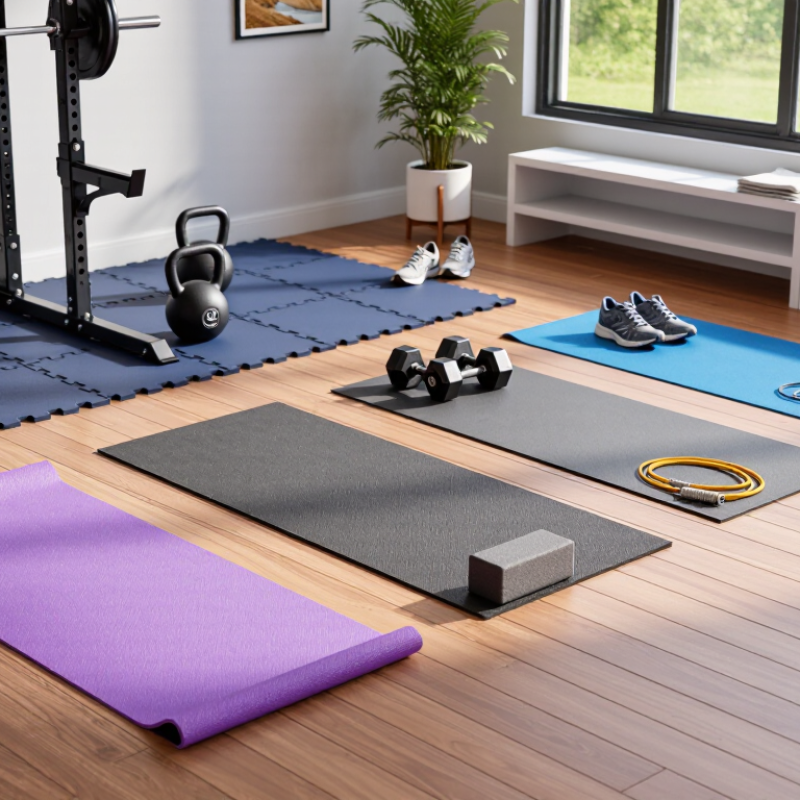
Start with the room and routine. A rolled mat beside a yoga block needs different features from interlocking tiles under a rack of dumbbells. Look for secure footing, appropriate impact absorption, and materials that are easy to clean. Measure the space, too. Small detail, big difference. No single mat is ideal for every workout, and thicker is not automatically better. The sections ahead compare common mat types, explain their trade-offs, and help match each option to real training needs. A little uncertainty is useful: flooring claims can sound similar, so check product specifications before buying.
What Are the Best Types of Workout Floor Mats?

How Workout Floor Mats Differ by Material and Construction

Material and construction determine how a workout mat feels underfoot and how well it handles repeated impact. Natural or synthetic rubber is dense, grips hard floors, and suits weights or quick footwork. Its weight can make it awkward to move. EVA foam is lighter and softer, but can compress under heavy equipment. PVC often offers a smooth, wipeable surface; its grip and durability vary by formulation. No material wins every workout.

Construction matters just as much. A thin, dense mat can feel stable for standing lifts, while a thicker foam mat cushions floor exercises but may feel wobbly beneath a loaded bar. ASTM F2772 evaluates indoor sports flooring using measurable properties such as force reduction and vertical deformation. These are more useful performance clues than thickness alone, though the standard covers sports-floor systems, not every home mat. For home use, check the maker’s stated material, thickness, surface texture, and cleaning guidance. A spec sheet can still leave questions.

Tips: Match the mat to the task. Test a small section with a lunge or plank; notice slipping, compression, and whether its edges curl. If you lift heavy, prioritize a firm, stable surface. If you stretch on tile, a softer layer may feel kinder, but it will not suit every movement.
Key Features That Affect Comfort, Grip, and Protection

Comfort depends on thickness, density, and how evenly a mat compresses beneath your body. A thin, firm mat can make push-ups feel stable, but it may press uncomfortably against knees on tile. A thicker mat cushions kneeling exercises, though excessive softness can wobble under standing lifts. Feel the difference. For shared spaces, measure the mat’s thickness and check whether its edges curl after repeated rolling.

Grip matters when palms sweat or shoes pivot during lunges. Look for textured surfaces and a stable underside; smooth mats can slide on polished floors. ASTM International’s F2772 athletic-flooring standard evaluates properties including force reduction and vertical deformation. These measurements show how flooring responds to impact, but they do not guarantee that a particular mat will grip your floor. Check it in the room where you train.

A 2002 Journal of Applied Physiology study by Kerdok and colleagues found that runners adjusted leg stiffness across surfaces with different stiffness. That finding is a useful reminder: one cushioning level will not suit every movement or person. Even a well-cushioned mat can fail to protect a floor if it shifts, leaves gaps, or cannot handle dropped weights. Test the fit. Slightly inconvenient, but worth it.

Common Types of Workout Floor Mats and Their Uses

Common Types of Workout Floor Mats and Their Uses

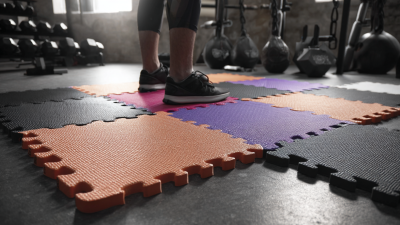
Foam mats are lightweight and comfortable for stretching, bodyweight exercises, and basic floor work. Interlocking tiles can cover a larger area, making them useful in home gyms or play spaces. They are easy to move, though heavy equipment may leave dents. That detail is easy to miss.

Rubber mats provide a firmer, heavier surface for strength training and equipment zones. Their grip can help keep the floor stable during lifts, but thick rubber may feel less comfortable for kneeling. Vinyl-covered mats are often used in studios because they are easy to wipe clean. Yoga mats are thinner and portable, suited to balance work and mobility exercises rather than dropping weights. No single mat fits every routine.

Tips: Match the mat to the activity and floor beneath it. Check thickness, grip, and whether the surface shifts when you move. For home use, measure the workout area before buying; a mat that looks roomy online can feel cramped beside a bench. Clean and dry it regularly, and replace it if seams split or the surface becomes slippery.

How to Match a Mat Type to Your Workout and Space

Choose a mat by impact, grip, and the way you move. For yoga, Pilates, and mobility work, a thinner, firm mat helps you feel stable during balance poses. For floor exercises, look for enough cushioning to protect knees and elbows without making push-ups feel wobbly. Jumping workouts need a resilient, non-slip surface, while heavy lifting usually calls for dense flooring that resists compression. One mat rarely does everything well.

Your room matters just as much. Measure the workout area, including space for arms and legs to extend, then check whether the mat rolls or folds away easily. The 2024 ACSM Worldwide Fitness Trends survey gathered responses from more than 2,000 fitness professionals; it reflects varied training needs, though it does not evaluate mat performance. Treat flooring choice as a practical fit, not a trend. I still wouldn’t assume thicker means safer: a soft surface can make balance work harder.

Tips: Test the mat on your actual floor. Try a lunge, plank, and a few small jumps. Check for sliding, edge curling, and pressure on your knees. In shared or compact spaces, favor easy storage and a wipe-clean surface. For persistent joint pain, ask a qualified health professional what level of cushioning suits you.

What Are the Best Types of Workout Floor Mats? - How to Match a Mat Type to Your Workout and Space
Mat type Typical construction and size Best suited workouts Space and surface match Main advantages Things to consider
Yoga or Pilates mat Usually about 3–6 mm thick; commonly around 60–72 in long and 24 in wide. Often made from PVC, TPE, or natural rubber. Yoga, Pilates, stretching, and controlled floor exercises. Small rooms and smooth, clean floors; rolls up for storage. Portable, easy to store, and provides a defined surface with useful grip. Usually offers limited protection for jumping, heavy equipment, or prolonged kneeling.
General exercise mat Often about 10–20 mm thick, with foam or a foam core and a wipe-clean outer layer; sizes vary by model. Bodyweight training, sit-ups, stretching, and light floor circuits. A single workout area on tile, wood, or other hard flooring; can be stored under furniture. More cushioning than a thin yoga mat and quick to set up. Thicker foam can compress or feel unstable during balance-focused moves.
Folding gym mat Padded foam panels joined by hinges; commonly around 1.5–2 in thick, with sizes that vary considerably. Floor exercises, mobility work, tumbling practice, and activities needing extra padding. Temporary workout spaces where the mat needs to fold away between sessions. Substantial cushioning and convenient folding storage. Bulky when stored; not generally designed for heavy weights or fast footwork.
Interlocking foam tiles EVA foam pieces that connect at the edges; tile thickness and dimensions vary by product. Light bodyweight workouts, stretching, and play or activity areas. Useful for covering a flexible floor area or an irregularly sized room; tiles can be taken apart for storage. Expandable coverage and simple installation without cutting a single large mat. May separate under forceful lateral movement; soft foam can dent under heavy equipment.
Rubber flooring or rubber tiles Dense rubber sheets or tiles; thickness ranges from relatively thin surface protection to thicker gym flooring. Strength training, stationary equipment, and home gym areas. A dedicated workout space; tiles or rolls can cover larger areas on a firm, level subfloor. Durable, stable, and better suited to equipment and floor protection than soft foam mats. Heavy and less portable; check floor compatibility, ventilation needs, and care instructions.
Cardio or dance mat Typically a broad, low-profile mat with a smooth or lightly textured surface; materials and dimensions vary. Dance workouts, step routines, and other movements involving repeated footwork. Open floor space where a wider, continuous workout surface is helpful. Provides more room for movement than a narrow exercise mat and can help protect the floor. Choose a surface with appropriate traction; overly soft or grippy surfaces may not suit every dance move.

Selection tip: Match cushioning and grip to the activity, then check the mat’s dimensions, floor compatibility, cleaning instructions, and storage requirements.

How to Choose and Maintain the Right Workout Floor Mat

Choose a workout mat for the exercises you actually do, not just its appearance. Dense rubber can help protect floors during strength training, while softer foam may feel more comfortable for stretching or bodyweight workouts. Thicker is not always better: a very cushioned surface can make balance exercises less stable. Check the mat’s dimensions, too. It should leave room for your usual movements without curling against furniture.

Grip matters. Look for a textured surface, then test whether the mat shifts on your floor during a controlled lunge or plank. On wood or other delicate flooring, check the care instructions and try a small, hidden area first; some materials may leave marks. There is no perfect mat for every workout. I sometimes underestimate how much floor space a session needs, so measuring first is a useful, unglamorous step.

Keep the mat clean and dry. Wipe away sweat after use with a soft cloth and mild soap, unless the manufacturer recommends another method. Avoid harsh cleaners, which may damage the surface or reduce its grip. Let the mat air-dry fully before rolling it up. Check it regularly for tears, worn texture, or edges that no longer lie flat. Replace it when damage affects stability; a worn mat can be a slipping hazard.