20+ years of production experience
Leave Your Message

How to Choose the Best Rubber Exercise Mats in 2026

Choosing Rubber Exercise Mats in 2026 is less about finding the thickest option and more about matching a mat to your training space. A dense, firm surface can support weights and steady footwork, while a softer mat may feel better for floor exercises. But extra cushioning is not always safer or more comfortable. Your equipment, floor type, workout style, and available space all matter.

This guide explains how to compare thickness, density, grip, durability, and maintenance before buying. It also considers practical details, such as whether a mat shifts under a loaded bench or leaves marks on hardwood. Small samples and product specifications can help, but they do not tell the whole story. Odor, seams, and surface texture may feel different once a mat is unrolled at home. That part is easy to overlook.

Reliable choices start with clear product information and realistic expectations. Check the manufacturer’s care instructions, warranty, and material details, then compare them with independent customer feedback. A low price may suit light home use, while a busy training area may need a tougher surface. There is no single best mat for everyone. By weighing the trade-offs, you can choose Rubber Exercise Mats that fit your routine without paying for features you may never use. One detail may still surprise you.
How to Choose the Best Rubber Exercise Mats in 2026

Define Training Loads and Coverage Needs Before Comparing Mat Specs

How to Choose the Best Rubber Exercise Mats in 2026
Define Training Loads and Coverage Needs Before Comparing Mat Specs

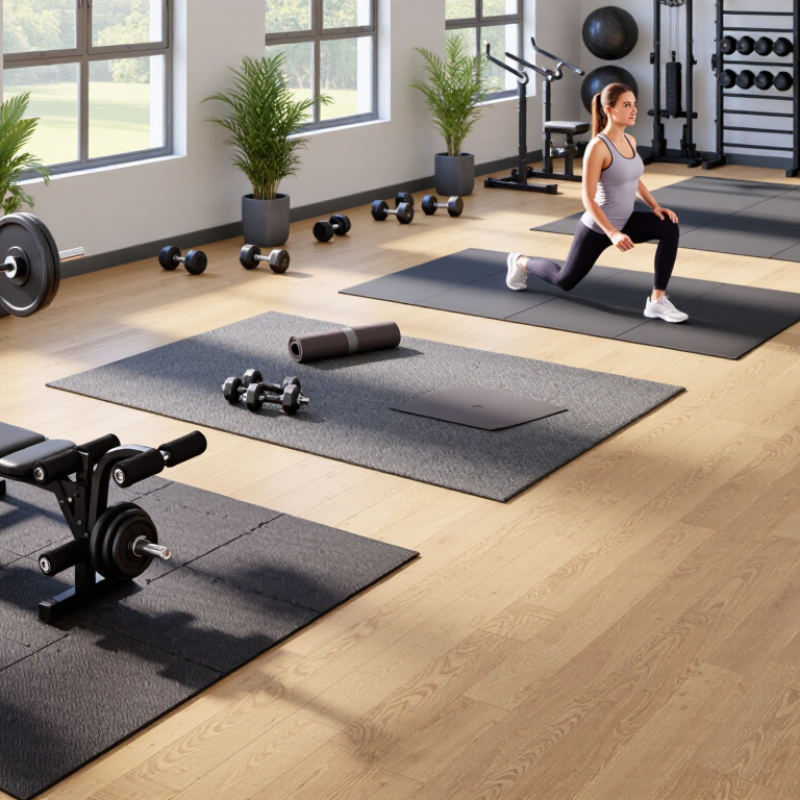
Start with reality. List each activity, piece of equipment, and likely load. A rack with loaded plates creates concentrated pressure; a stretching area needs room for movement, not heavy-duty flooring. Measure twice. Include space for a bench, safe access around equipment, and the small gaps where dust and grit collect.

Estimate the heaviest setup, including the bar, plates, and equipment—not just your current working weight. Then consider impact: controlled lifts and dropped weights create very different demands. The ACSM’s 2021 resistance-training position stand describes load prescriptions using repetition maximums, reinforcing that training intensity varies by user and goal. It does not specify mat load ratings, so check manufacturers’ test methods rather than treating thickness as proof of capacity. Thicker is not automatically better.

Coverage matters just as much. Sketch your floor plan and mark where equipment feet, benches, and walking paths land. Leave enough mat beneath and around lifting stations to protect the floor from contact and movement. The ACSM’s 2023 Worldwide Survey of Fitness Trends ranked strength training with free weights second; that signals broad interest, not a flooring specification. It is easy to overestimate coverage. Recheck the layout with equipment in place, and account for seams, door clearance, and uneven floors before comparing rubber density or surface texture.
How to Choose the Best Rubber Exercise Mats in 2026

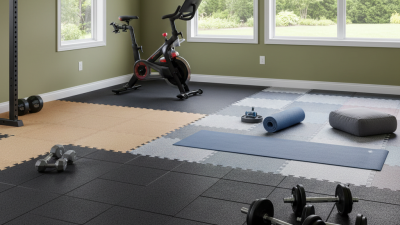
Define your training load and floor coverage before comparing mat specifications.

Example planning footprints, calculated as length × width: a dumbbell and bench area (6 × 8 ft) covers 48 sq ft; a rack and lifting area (8 × 10 ft) covers 80 sq ft; and a multi-station area (10 × 12 ft) covers 120 sq ft. These are illustrative layouts, not universal standards. Measure your equipment and allow the clearance recommended by its manufacturer before choosing mat size, thickness, or load rating.

Compare Rubber Hardness with ASTM D2240 Shore A Durometer Testing

When choosing rubber exercise mats, Shore A hardness offers a useful starting point, not a verdict. ASTM D2240 describes how a durometer measures resistance to indentation in elastomeric materials. The instrument presses a small foot against the surface, producing a reading that helps compare samples tested under similar conditions.

Small details matter. Temperature, sample thickness, surface texture, and test location can affect results. A layered mat may also feel different from a solid rubber sample, even when their readings look similar.

Ask for the test method and conditions, not just a hardness number. If possible, compare samples at the same temperature and check several spots, including near the center and edges. Repeat readings can reveal unevenness.

A harder mat may feel stable beneath weights, while a softer one may cushion floor exercises better; neither number tells the whole story. Hardness alone does not establish grip, impact absorption, or long-term wear. It is easy to overvalue a tidy figure, and that is worth questioning. Consider the intended workouts, flooring, and how the mat feels underfoot before deciding.

Use EN 14904’s 25–75% Shock-Absorption Range as a Sports-Floor Benchmark

How to Choose the Best Rubber Exercise Mats in 2026

EN 14904:2006 sets a 25–75% force-reduction range for indoor sports surfaces, measured against a rigid reference floor using EN 14808. It is a useful benchmark when comparing cushioning, but it is not a blanket certification for every loose rubber exercise mat. A mat tested alone may behave differently once placed over concrete, timber, or another resilient layer. That matters.

Ask for the actual test report, not just a product-page claim. Check whether it identifies the tested surface build-up, thickness, and test method. A reading near 25% indicates less impact reduction; a reading near 75% indicates more. Neither end is automatically best: equipment stability, movement, and intended use also matter. Not a guarantee.

For a home gym, press a loaded heel into the mat and notice whether it rebounds evenly or feels spongy. Then test a controlled lunge or step-down; edges should stay flat, and the surface should not shift. EN 14904 is designed for sports-floor systems, so use its range as a comparison point, not proof that a portable mat meets every flooring requirement. I would be cautious about choosing by softness alone. A softer feel can be pleasant, yet it may not suit every lift or exercise.

How to Choose the Best Rubber Exercise Mats in 2026 — Use EN 14904’s 25–75% Shock-Absorption Range as a Sports-Floor Benchmark

Use this comparison to assess intended use, safety information, and test evidence when evaluating rubber exercise mats. The EN 14904 figures below are sports-floor benchmarks, not a claim that a particular mat is certified to that standard.

Selection Factor What to Check Useful Benchmark or Evidence How to Apply It
Shock absorption Ask whether impact performance has been measured on the complete installed flooring system, rather than inferred from the rubber material alone. EN 14904 specifies a 25–75% shock-absorption range for indoor sports-floor surfaces. EN 14808 is the associated test method. Use the range as a sports-floor reference point. Do not assume an exercise mat meets EN 14904 unless the supplier provides applicable test documentation.
Intended exercise Match the mat to the activity: floor exercises, strength training, or use under heavy equipment. There is no single thickness or shock-absorption value that is suitable for every activity. Consider stability as well as cushioning. A surface that compresses substantially may feel less stable for standing lifts or balance work.
Vertical deformation Check how much the surface deflects under a test load, and whether the result applies to the full floor build-up. EN 14904 sets a maximum vertical deformation of 5 mm for the relevant indoor sports-floor performance requirement; EN 14809 is the associated test method. Treat this as a sports-floor benchmark, not a universal exercise-mat specification. Ask for the test method and measured result.
Slip resistance Look for test results for the surface finish and the conditions under which it was tested. EN 14904 gives a sliding-friction range of 80–110 for indoor sports flooring, measured using its specified method. Grip can vary with surface texture, footwear, dust, moisture, and cleaning. A test result does not guarantee the same traction in every home or gym.
Material and construction Ask whether the mat is solid rubber, rubber granulate bound with a binder, or a layered construction; check the stated material composition. Material type alone does not establish impact performance, durability, or safety. Compare product documentation and construction details. For layered or interlocking systems, assess the assembled surface, edges, and joints.
Dimensions and fit Confirm the mat’s length, width, thickness, and coverage area, including how multiple pieces connect. Dimensions are product-specific; there is no EN 14904 mat size requirement. Measure the exercise area and allow room for movement. Check whether seams, gaps, or raised edges could interfere with use.
Odor and indoor use Request information on material composition, ventilation guidance, and any available emissions documentation. Odor is not a measure of shock absorption or compliance with EN 14904. Follow the supplier’s unpacking and ventilation instructions. If indoor-air emissions matter for the space, request relevant test documentation.
Cleaning and maintenance Check which cleaners are permitted and whether the surface requires drying after cleaning. Care instructions depend on the mat material, binder, finish, and installation. Use the manufacturer’s care guidance. Test a cleaner on a small area first if compatibility is uncertain.
Test documentation Check the standard and test method, specimen or system tested, date, and reported result. For EN 14904 performance claims, request documentation that identifies the tested flooring system and relevant test methods. Do not treat a material data sheet or a general statement such as “sports grade” as proof of compliance for the finished installation.

Important: EN 14904 applies to indoor sports-floor surfaces. A standalone rubber exercise mat is not automatically covered by, or compliant with, that standard. Verify the current standard and the scope of any test report before relying on a stated performance claim.

Check Tensile Strength and Elongation Using ASTM D412 Test Data

For a 2026 rubber exercise mat, ask for a recent laboratory report—not just a product-page claim. ASTM International’s ASTM D412 test method measures tensile strength and elongation at break in vulcanized rubber and thermoplastic elastomers. Check that the report identifies the specimen type, thickness, test conditions, and results. Small differences in setup can make comparisons unreliable.

Read the stress–strain data together. A hypothetical report might show 8 MPa tensile strength and 250% elongation for one mat, versus 12 MPa and 180% for another. These figures are examples, not market benchmarks. The second sample withstands greater tensile stress, while the first stretches farther before breaking. Neither result alone proves better grip, cushioning, or long-term fatigue resistance. D412 elongation at break also does not measure how well a mat springs back after repeated use.

Look for comparable, independent reports for the exact material and thickness you plan to buy. Ask whether samples were conditioned and tested consistently. ASTM D412 measures tensile behavior, not tear resistance; ASTM D624 is a more relevant test for tear strength. Still, lab data cannot fully mimic a sweaty shoe twisting on a gym floor. Numbers help, but they are not the whole mat.

Screen Indoor Emissions Against CDPH Standard Method v1.2

When choosing rubber exercise mats in 2026, compare more than thickness, grip, and price. Indoor emissions deserve a place on the specification sheet. Ask for a chamber-testing report that names CDPH Standard Method v1.2. The method measures chemical emissions under controlled conditions and compares modeled indoor exposure concentrations with health-based criteria. It is not a general “non-toxic” seal. A faint odor is a clue, not a measurement.

Check that the report identifies the exact mat construction, including its rubber blend, color, coating, and backing. Small changes can affect emissions. Confirm the sample date and chamber conditions; a report for a different formulation offers limited reassurance. Review individual VOC results and method-specific criteria instead of relying on TVOC alone. Even a complete report cannot predict every room, ventilation pattern, or person’s sensitivity. That limitation matters.

Tips: Request the full lab report, not just a marketing excerpt. Match its product identifiers to the specification sheet. Compare results from the same method. If details are missing, ask before buying. Odor checks are imperfect, but still practical.