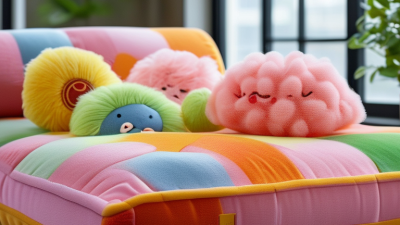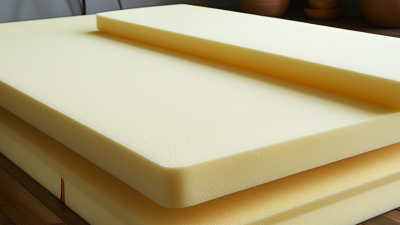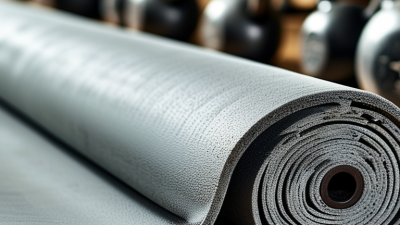
For retailers, childcare providers, and family-focused businesses, an Abc Puzzle Mat can serve as both a practical floor covering and a colorful play surface. Its interlocking pieces are easy to arrange around a reading corner, play area, or small shop display. Yet a bright design alone does not make a strong product choice. Buyers should examine material details, surface texture, cleaning instructions, piece fit, packaging, and replacement options before placing a bulk order.
The market context is encouraging, but it needs careful interpretation. Grand View Research estimated the global toys market at USD 324.6 billion in 2023 and projected growth through 2030. That figure describes toys broadly; it does not prove demand for puzzle mats specifically. A sensible business decision should pair market research with customer feedback, sample testing, and a close look at supplier specifications. Small details matter. A loose edge or difficult-to-clean groove may shape a customer’s opinion more than attractive packaging.
Pediatrician Dr. Michael Yogman and coauthors wrote in an American Academy of Pediatrics clinical report, “Play is not frivolous: it enhances brain structure and function and promotes executive function.” Their statement supports the value of play, not any particular mat. That distinction matters. Businesses should present product benefits accurately, avoid unsupported safety claims, and verify relevant documentation with suppliers. No mat is perfect. A careful review can still help businesses choose products that fit their space, customers, and service standards.
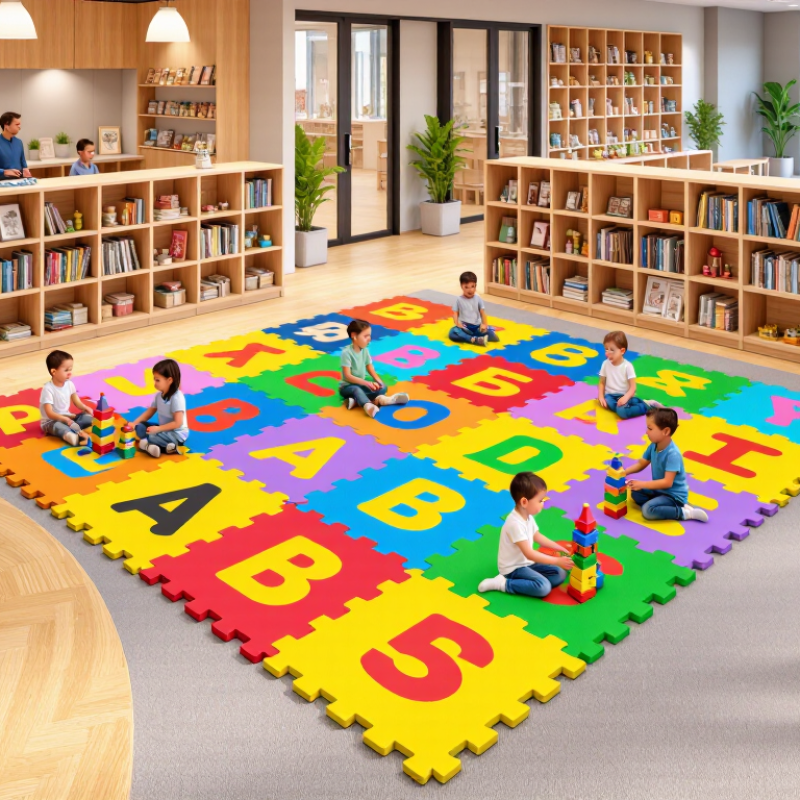
ABC puzzle mats are soft, interlocking floor tiles with letters that can be pressed out and replaced. Many are made from EVA foam, although materials and construction vary by product. The foam gives the tiles a cushioned feel and keeps them light enough for adults to rearrange easily. The letters lift out. A small hand can explore each shape, while the square tiles connect to cover a play area.
In production, foam is formed into sheets or panels, then cut or molded into tiles. Letter shapes are created in the tile surface or as separate pieces, depending on the design. Color is added during manufacturing, rather than painted on in every case. Edges and interlocking tabs need consistent sizing; otherwise, tiles may separate or leave uneven gaps. Quality checks can include examining the fit, surface, and odor, but checks differ among manufacturers.
The process sounds neat on paper. In practice, foam density, cutting precision, and storage can affect how a mat feels and fits. A slightly raised letter may catch a fingertip; a loose edge can curl after repeated use. For business buyers, asking for material details, care instructions, and sample tiles offers a more useful assessment than relying on photographs alone. Even then, one sample may not show how a full floor will perform.
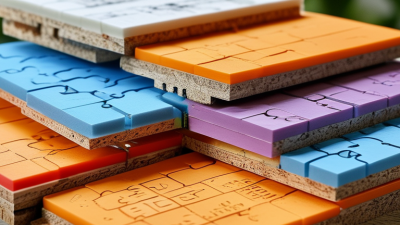
Commercial floors face more than ordinary foot traffic. Staff move carts, visitors pause in busy areas, and equipment can leave marks on hard surfaces. Interlocking puzzle mats provide a cushioned layer that can be fitted to different room shapes. Their modular design also makes damaged sections easier to replace than a full floor covering. That matters.
For business use, look for dense foam, secure-fitting edges, and a surface texture that offers grip without trapping every bit of dust. A wipeable finish helps with routine cleaning, while contrasting colors can define exercise zones or work areas.
Check the mat thickness against the activities planned; extra cushioning may feel comfortable, but can make carts less stable. Small details count. Seams are still seams, so spills should be cleaned promptly, and tiles need periodic checks for lifting or wear.
In a reception area, loose edges can look untidy. In a training room, they may interrupt movement. The right choice depends on traffic, cleaning routines, and the floor beneath it. A short trial in the busiest corner can reveal issues that product descriptions miss.
ABC puzzle mats can turn a bare floor into a defined play or learning area without permanent installation. Interlocking pieces are easy to rearrange as class sizes change. Replace a damaged tile, not the entire floor. That matters in childcare centers, family activity spaces, and indoor play venues, where layouts often shift between story time and free play.
There is a wider business context. The Health & Fitness Association’s 2024 Global Report recorded 72.9 million U.S. health-club memberships in 2023. That figure does not measure demand for puzzle mats, but it shows the scale of the broader activity market. For operators adding children’s areas, colorful alphabet tiles can make a space feel more welcoming while creating a visible boundary for play. Small detail. Big difference.
Practical upkeep deserves equal attention. Smooth foam surfaces can be wiped between sessions, and individual tiles are usually lighter to lift than fixed flooring. Still, seams may collect crumbs, and frequent assembly can loosen connections. Staff should inspect edges, clean beneath the mats, and follow the maker’s care instructions. I would also check tile thickness, slip resistance, and applicable safety documentation before buying; bright colors alone tell you little about performance.
Common Business Settings for ABC Puzzle Mats
ABC puzzle mats can create a defined, cushioned area in businesses where people sit, play, or exercise. In childcare rooms, they give children a softer place for floor activities, while staff can separate play zones from walkways. The interlocking pieces are easy to rearrange, though loose edges may need regular checks. A mat does not replace active supervision.
Fitness studios may use them for stretching, light floor exercises, or a temporary activity space. Retail shops can set up a small play corner or product demonstration area. In clinics and family waiting rooms, a mat can make a child-friendly spot, but frequent visitors also mean more cleaning. Spills happen. Different floor plans and cleaning routines can make one setup unsuitable for every business.
Tips: Measure the area before ordering, and leave clear paths around doors and equipment. Check that the mat stays flat under regular foot traffic. Choose a surface that staff can clean using suitable products, and follow the maker’s care instructions. Don’t assume thicker always means better; test comfort and stability in the intended setting.
These illustrative layout examples show the floor area covered by puzzle mats in common business settings. Areas are calculated from the room dimensions shown; tile counts assume standard 2 × 2 ft mats, with no allowance for trimming or spare tiles. They are planning examples, not industry averages.
Choosing ABC puzzle mats for a business starts with the room, not the color. Measure the usable floor area, including corners and doorways. Then estimate daily foot traffic and the activities the mats must support. A childcare space may need a softer surface than a quiet reading corner. Match the mat thickness and firmness to the intended use, and check that pieces connect securely without creating raised edges.
Material and maintenance matter, too. Ask for product details on foam composition, cleaning methods, and expected wear. If customers or staff will walk on the mats often, test a sample on the actual floor. Check whether it shifts, feels stable, and cleans easily after a small spill. A low price can be tempting, but replacement costs add up. I would not assume every foam mat performs the same; specifications can be incomplete, so ask clear questions before ordering.
Tips: Measure twice. Confirm tile dimensions and total coverage, then order a small sample if possible. Keep a few spare pieces for replacements, and follow the supplier’s care instructions. A simple checklist helps, though it may not catch every mismatch.
| Selection Dimension | What to Compare | Business-Friendly Guidance | Why It Matters |
|---|---|---|---|
| Intended use | Play areas, classrooms, childcare spaces, retail displays, or temporary event flooring | Match the mat’s stated use and tested performance to the setting. For frequent, active use, prioritize durable construction and a stable fit. | A mat designed for light indoor play may not suit heavy traffic or every commercial environment. |
| Material | Foam type, construction, and product documentation | EVA foam is commonly used for lightweight interlocking play mats. Review the product specification sheet and ask about material composition and applicable test reports. | Material affects feel, weight, cleaning options, durability, and suitability for the intended space. |
| Thickness and cushioning | Available thickness options and the manufacturer’s intended-use guidance | Compare thickness alongside firmness and stability; thicker foam is not automatically more suitable. Confirm the product’s performance claims with documentation. | Comfort, stability, and protection depend on more than thickness alone, including foam density and the surface below. |
| Tile dimensions and coverage | Tile length and width, number of tiles per pack, and usable assembled area | Calculate the required floor area, then allow for layout changes, edges, and replacement pieces. Confirm whether listed dimensions include removable border strips. | Accurate planning helps control order quantities, installation time, and leftover inventory. |
| Interlocking fit | Connector design, edge pieces, and compatibility between production lots | Request a sample or assemble a small test area before a large order. Avoid assuming that tiles from different product lines will connect securely. | A consistent fit helps reduce gaps, loose edges, and interruptions during setup. |
| Letters and colors | Letter set, color consistency, print or surface finish, and replacement availability | Check that the set includes the letters and quantities needed for your activities. Ask whether individual tiles or complete replacement sets can be reordered. | Clear, consistent pieces support learning activities and make damaged or missing tiles easier to replace. |
| Cleaning and maintenance | Permitted cleaning methods, moisture guidance, and drying instructions | Follow the care instructions supplied with the product. Test any cleaning solution on an inconspicuous area if the manufacturer permits it. | Care requirements affect staff workload and help preserve the surface and printed details. |
| Safety and documentation | Applicable market requirements, test reports, warnings, and product traceability | Request current documentation for the exact product and market where it will be sold or used. Verify claims directly rather than relying on general descriptions. | Requirements vary by location and intended use; suitable documentation supports responsible purchasing and product review. |
| Storage and shipping | Pack dimensions, shipping weight, storage conditions, and lead time | Compare the delivered cost and storage footprint, not just the per-pack price. Confirm carton quantities and replenishment timing before committing to a rollout. | Logistics can affect margins, inventory planning, and the ability to fulfill customer orders on time. |
| Total cost of ownership | Unit price, freight, expected replacement needs, and reorder terms | Compare like-for-like specifications and calculate cost per usable square foot or square metre. Include samples, shipping, and replacement availability. | A lower purchase price may not represent the best value if coverage, durability, or replenishment options differ. |
Purchasing note: Product specifications and compliance requirements vary. Confirm dimensions, care instructions, intended use, and supporting documentation with the supplier before placing a business order.