How to Choose the Best Workout Floor Mats
Choosing Workout Floor Mats can seem like a small decision until a dumbbell lands, a knee presses into the floor, or sweat makes a surface slick. The right mat can cushion movement, improve traction, and help protect flooring, but no single option suits every workout. A thick foam mat may feel comfortable for stretching, yet compress too much beneath heavy equipment. Dense rubber can feel steadier, though it may be harder to move or clean. Small details matter.
This guide explains how to compare mat materials, thickness, grip, size, and maintenance for the space and exercises you actually use. It also considers practical questions: Will the mat stay put on tile? Can it cover the area beneath a bench? Does its surface wipe clean after a sweaty session? Check product specifications, floor compatibility, and care instructions rather than relying on appearance alone. If possible, test how a mat feels during familiar movements before committing to a larger setup. That advice is not perfect; home floors, equipment, and comfort preferences vary. A mat that works well for bodyweight training may not be suitable for lifting or high-impact exercise. The aim is a considered choice, not a universal promise.
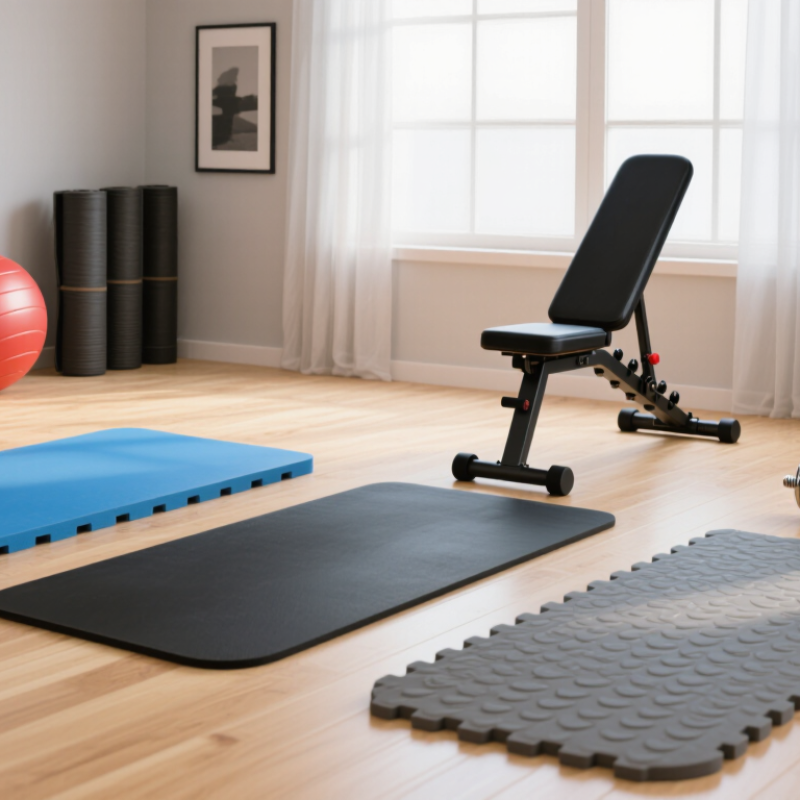
Assess Training Type, Equipment Loads, and Available Floor Area
Match the mat to the work you actually do. For yoga, mobility drills, or bodyweight circuits, a thinner, firm surface often feels steadier underfoot. Jumping and floor exercises may call for more cushioning, but a very soft mat can make balance harder. Test a few movements if possible. A mat that feels comfortable while standing may shift during lunges.
Equipment changes the calculation. Dumbbells spread load differently from a squat rack, whose feet press weight into small areas. Check the mat’s stated load guidance, and consider the combined weight of equipment and users. Measure the rack’s full footprint, not just the visible frame. Then add space for stepping, lifting, and moving around it. Leave room for doors and storage, too. Small details matter. I’ve seen floor plans look generous on paper, then feel cramped once a bench is in place. That estimate can be wrong. Recheck the measurements before buying, and make sure seams or edges will not sit where feet regularly land.
Compare Rubber, EVA, and PVC for Grip, Resilience, and Wear
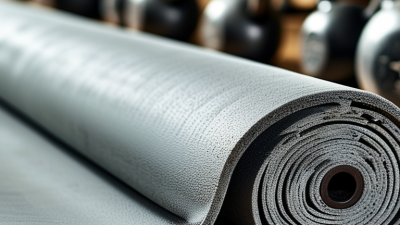
Rubber mats usually offer the steadiest grip under shoes and bare feet, even when a workout gets sweaty. Their weight helps them stay put during squats, while the dense surface handles repeated impact from dumbbells. They can smell strongly when new, and some floors may need protection from rubber discoloration. Check the mat’s underside and your floor finish before buying.
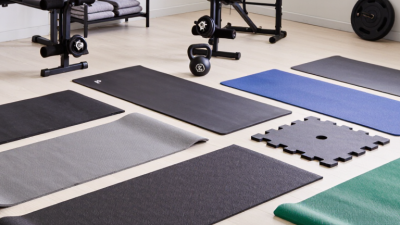
EVA foam feels softer and lighter, which can make floor exercises more comfortable on knees and elbows. That softness has a trade-off: heavy equipment may leave dents, and quick footwork can shift or compress the surface. A hand press gives a rough clue; if the foam stays indented, it may wear faster under regular lifting. PVC mats are often thinner and easier to roll or wipe clean. Their grip varies, though, and a slick surface can become less secure with sweat or dust.
Think about the movement, not just the material label. For lifting, a firm rubber surface can feel stable; for stretching, cushioned EVA may be kinder to joints. PVC can suit lighter routines where easy storage matters. No mat solves every problem. I would also test a sample with the shoes used for training, since tread patterns and floor dust can change how it grips. A small corner curling after repeated rolling is worth noticing.
Choose Mat Thickness Based on Impact Load, Not Cushioning Alone
How to Choose the Best Workout Floor Mats
Choose Mat Thickness Based on Impact Load, Not Cushioning Alone
A mat should match the force your workout sends into the floor. For standing exercises, stretching, or light yoga, a thinner, firmer surface usually supports balance better. Too much give can make lunges and single-leg moves feel wobbly. For jumping or dropping weights, impact protection matters more. A thicker mat may help reduce noise and protect the floor, but thickness alone does not guarantee stability. Density and material also affect how a mat handles repeated force.
Tips: Check the mat’s intended use and weight rating. Press down with your palm, then test a squat or a small hop if possible. Notice whether the surface compresses evenly or bottoms out. Keep the mat flat, and check that it does not slide on your floor.
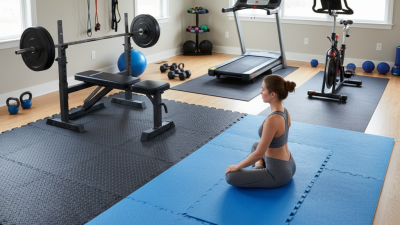
Think about the whole setup. A controlled bodyweight routine places less impact on the floor than repeated jump training. Heavy weights can create sharp, concentrated force, so interlocking tiles or dense rubber may suit that area better than a soft, thin mat. Measure the workout space, including room for movement. One detail is easy to overlook: a very thick mat can catch your feet at the edges. There is no perfect thickness for every home, and product descriptions can be vague. Match the mat to your most demanding exercise, then adjust if your balance or floor protection needs differ.
Check Slip Resistance and Performance Against ASTM F2772 Test Criteria
A mat can feel secure under a dry palm and still shift when you step hard in damp shoes. Test it on the floor where you plan to use it. Press the edges, then try a controlled lunge and a quick side step. Watch for sliding, curling, or movement underneath. Small details matter.
ASTM F2772 covers performance properties of indoor sports floor systems, including force reduction and vertical deformation. These measures help describe impact response and stability, but they do not automatically prove that a particular workout mat resists slipping. Ask for the test report, the tested product configuration, and the conditions used. Check whether friction or slip resistance was tested, and which method and results apply. A standard reference without details is not enough.
Match the evidence to your routine. For weight training, check whether the mat stays put under a loaded stance. For floor exercises, notice whether bare hands and feet grip without sticking. Repeat checks after cleaning, since residue or moisture can change traction. I might be tempted to choose the thickest mat, but thickness alone says little about grip. That assumption deserves a second look. If the supplier cannot clarify the test results, compare a sample in your actual space before buying.
How to Choose the Best Workout Floor Mats
Check slip resistance separately from athletic-floor performance under ASTM F2772.
How to read this chart: 1 means the attribute is addressed by ASTM F2772’s athletic-floor performance scope; 0 means F2772 alone does not establish it. This is a scope guide, not test data or a pass/fail rating. Review relevant test reports and verify slip resistance separately for the intended use.