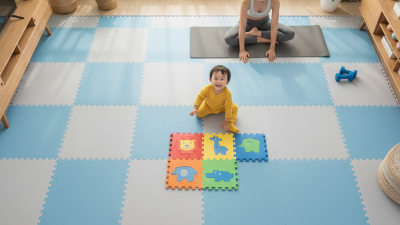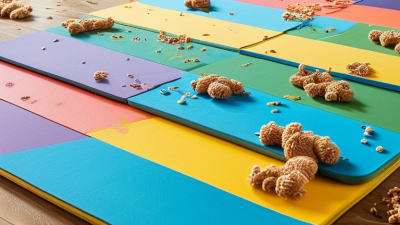
Choosing an Eva Play Mat is no longer a simple comparison of colors, thickness, and cartoon patterns. Global buyers now examine foam composition, odor, surface grip, cleaning performance, packaging, and documented testing. The market is expanding, but reliable product-level data remains limited. Grand View Research and Fortune Business Insights track broader baby-care and flooring categories, rather than Eva Play Mat sales alone. Their figures are useful directionally, not perfectly precise.
Safety deserves closer attention. The U.S. Consumer Product Safety Commission emphasizes hazard reduction, labeling, and testing for children’s products. ASTM F963 and EN 71 are also important reference points when suppliers discuss toy-related material safety. Certification claims still require verification. A logo alone proves little.
Polymer engineer Dr. Rina Patel states, “EVA’s softness is a design feature, not proof of chemical safety.” This principle should guide every supplier comparison. Buyers should request technical data sheets, batch information, test reports, and traceable factory details. They should also inspect sample edges, interlocking accuracy, compression recovery, and odor after unpacking. Small flaws become obvious on a nursery floor.
The following Top 10 Eva Play Mat Manufacturers for Global Buyers evaluates manufacturers through a practical sourcing lens. It considers production experience, customization, quality systems, export capability, and communication reliability. Price remains relevant, but it should not dominate the decision. Some supplier information may change quickly, and public claims can be incomplete. That uncertainty deserves honest attention. A strong shortlist is not merely attractive; it is measurable, testable, and suitable for real family use.
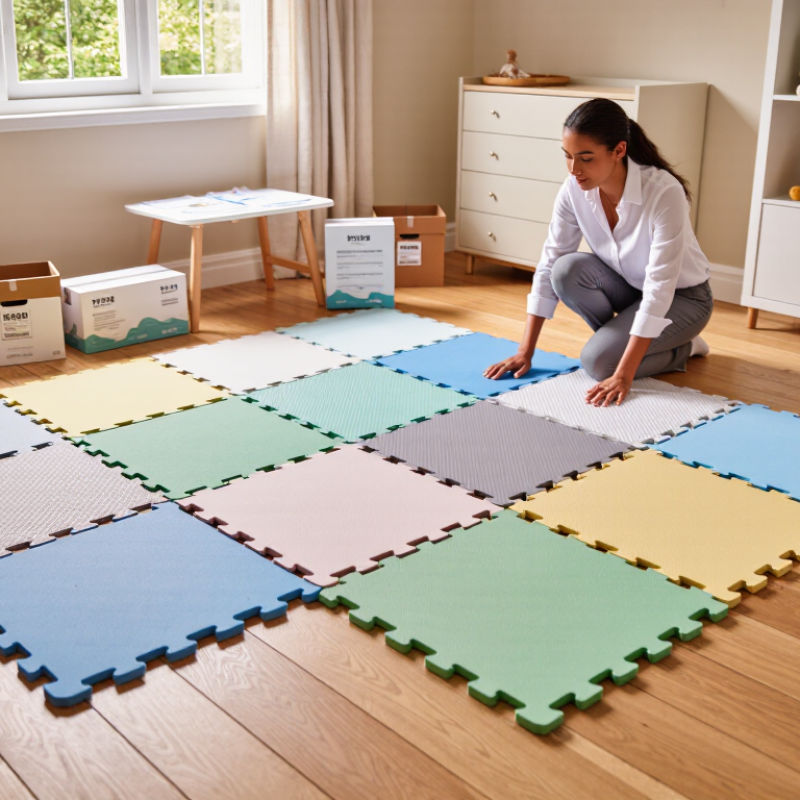
What Defines a Reliable EVA Play Mat Manufacturer
A reliable EVA play mat manufacturer proves quality beyond attractive product photos. Grand View Research reports that the global ethylene-vinyl acetate market is expanding steadily, driven by packaging, footwear, and consumer products. This growth creates more suppliers, but not all maintain consistent foam performance. Buyers should request batch records, factory audit evidence, and current test reports. The factory should identify EVA density, thickness tolerance, surface hardness, and color stability for every production run.
Material safety requires documented testing. Intertek’s consumer product safety guidance emphasizes testing for restricted substances, physical hazards, and product durability. A dependable manufacturer should provide results from accredited laboratories, not informal internal checks. Documents should support applicable requirements such as ASTM F963, EN 71, or REACH, depending on the destination market. Check the report number, sample description, testing date, and laboratory accreditation. Small details matter.
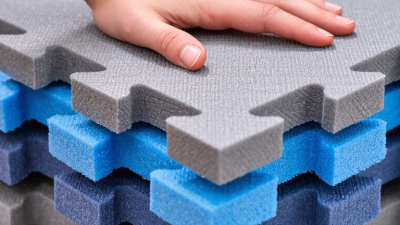
Production experience becomes visible during inspection. Edges should interlock without force, corners should remain flat, and surfaces should recover after compression. A 10-millimeter mat may feel soft, yet density differences can affect cushioning and odor. This is easy to miss. Packaging also deserves attention; compressed cartons can deform tiles before arrival. Manufacturers should explain moisture control, carton strength, and replacement procedures. No checklist is perfect. I would still test a pre-shipment sample on a hard floor, because laboratory results cannot reveal every practical weakness.
Global buyers should compare EVA play mat suppliers beyond price and catalog photographs. Grand View Research’s 2024 EVA market report projects annual growth above 5% through 2030. This expansion attracts capable factories, but documentation quality varies. Request a recent factory audit, production capacity, mold ownership details, and batch traceability. A supplier should explain how it controls thickness, density, edge cutting, color consistency, and compression recovery.
Safety evidence needs careful checking. ASTM F963-23 applies to toys sold in the United States, while EN 71 supports European toy safety assessment. Ask for complete laboratory reports, not only certificate covers. Confirm the tested product matches the current mat, ink, surface coating, and packaging. Test reports should show laboratory identity, test dates, sample photographs, and failure limits. Odor testing also matters. Strong chemical smells in a showroom deserve investigation.
Sustainability is harder to judge. The OECD’s 2022 Global Plastics Outlook reported 353 million tonnes of plastic waste in 2019, more than double the 2000 level. Ask whether production scrap is recycled, whether cartons use recycled content, and how suppliers manage rejected mats. Some factories provide impressive claims without measurable records. That is a warning, though not always proof of poor practice. Compare three samples after folding, cleaning, and repeated pressure. No checklist is perfect. Performance data can still expose weak suppliers.
Top 10 Eva Play Mat Manufacturers for Global Buyers
Top 10 EVA Play Mat Manufacturers by Product Strengths
Choosing among the top ten EVA play mat manufacturers requires more than comparing catalog photos. Each supplier usually excels in a different product strength. One may produce high-density foam with firm rebound, while another focuses on lightweight interlocking tiles. Some specialize in large play surfaces, foldable mats, or thick cushioning for crawling areas. Others offer bright geometric patterns, waterproof surfaces, or custom dimensions for childcare rooms. The strongest manufacturers should explain foam density, surface texture, edge accuracy, and packaging methods clearly.
Look for manufacturers with practical quality controls. Reliable suppliers test compression recovery, odor levels, color stability, and connection strength. Ask for recent material reports and samples before placing a bulk order. A qualified factory can also discuss applicable toy-safety requirements for your market without making vague promises. Small details matter. Clean-cut edges reduce gaps where dust collects. A textured finish can improve grip, but deep patterns may be harder to wash. Some manufacturers use recycled content, yet buyers should verify consistency and safety documentation.
No factory leads in every category. A thicker mat is not always safer, especially if it slides on smooth flooring. Interlocking tiles are convenient, but repeated assembly can loosen weak joints. Foldable designs save storage space, although their creases may affect long-term appearance. My purchasing experience suggests testing one sample through daily use, spills, compression, and cleaning. The best match depends on room size, user age, climate, and maintenance habits—not only on the lowest quotation.
This benchmark compares the product strengths most relevant to global buyers. The index uses a 100-point evaluation framework covering safety, cushioning, durability, design flexibility, cleaning performance, and export readiness, without identifying individual companies or brands.
Higher scores indicate stronger product capability in each purchasing dimension. Safety compliance and material performance generally receive the greatest weight in international EVA play mat sourcing.
Top 10 Eva Play Mat Manufacturers for Global Buyers
International Standards, Safety Testing, and Quality Control
For global buyers, an EVA play mat is not merely a soft surface. It is a children’s product with direct skin contact and frequent handling. A reliable manufacturer should provide batch-specific test reports, material declarations, and traceable production records. The core checks usually include EN 71-1 for mechanical safety, EN 71-2 for flammability, and EN 71-3 for the migration of certain elements. Buyers targeting the United States should also request evidence related to ASTM F963, CPSIA requirements, lead, and restricted phthalates.
Testing must match the actual product. A report for raw foam cannot prove the safety of printed surfaces, adhesives, or finished puzzle edges. Ask for samples from current production. Small details matter, including odor after 48 hours, color transfer after rubbing, and edge separation after repeated assembly. Some suppliers provide impressive certificates but weak batch control. That gap deserves attention.
The EU Safety Gate 2023 report recorded 3,412 alerts for dangerous non-food products, with toys among the frequently notified categories. This figure shows why documentation alone is insufficient. A competent factory should control incoming foam density, dimensional tolerance, surface cleanliness, and packaging conditions. Independent laboratories can verify results, but factory records reveal consistency. Buyers should also review corrective-action reports, not only pass certificates. No process is perfect. A supplier willing to explain a failed test may be more dependable than one presenting an unusually spotless file.
| Rank | Anonymous Manufacturer Profile | Typical EVA Product Capability | International Safety Frameworks to Verify | Key Laboratory Tests | Material and Chemical Controls | Quality-Control Practices | Recommended Buyer Documents | Global Buyer Suitability |
|---|---|---|---|---|---|---|---|---|
| 1 | Manufacturer Profile A | Interlocking tiles, reversible play mats, alphabet and number designs | EN 71; ASTM F963; CPSIA; REACH | Mechanical and physical properties; flammability; migration of certain elements | Lead and phthalate restrictions; restricted substances under REACH Annex XVII | Incoming EVA inspection, first-article approval, in-process checks, final AQL inspection | Recent third-party test reports, material declaration, batch traceability records | High |
| 2 | Manufacturer Profile B | Large-format foldable mats, non-slip surfaces, custom thickness options | EN 71; ISO 8124; ASTM F963; REACH | Surface coating durability, dimensional stability, seam and edge inspection | EVA resin identification, pigment control, heavy-metal screening | Production sample retention, calibrated gauges, carton drop testing | Factory quality manual, calibration certificates, packaging test records | High |
| 3 | Manufacturer Profile C | Baby crawling mats, printed foam mats, water-resistant play surfaces | EN 71; CPSIA; ASTM F963; REACH | Flammability, soluble-element migration, print adhesion, odor evaluation | Phthalate screening, lead limits, azo-colorant and restricted-chemical review | Artwork approval, color comparison, print registration, 100% visual inspection | Declaration of conformity, approved artwork record, test sample identification | High |
| 4 | Manufacturer Profile D | Interlocking gym-style tiles and high-density EVA activity mats | ASTM F963; CPSIA; ISO 8124; REACH | Compression recovery, density uniformity, tensile and tear performance | Material safety data review, restricted-substance testing, odor control | Foam-density sampling, thickness measurement, compression-set monitoring | Technical data sheet, density report, production inspection checklist | High |
| 5 | Manufacturer Profile E | Portable roll-up mats, travel mats, lightweight EVA foam products | EN 71; ASTM F963; CPSIA; REACH | Flexing durability, fold endurance, seam strength, physical and mechanical safety | Low-VOC material selection, pigment verification, lead and phthalate testing | Roll diameter checks, folding-cycle tests, accessory and label inspection | Packaging specification, durability report, labeling and warning review | Good |
| 6 | Manufacturer Profile F | Educational EVA tiles, geometric sets, customized OEM designs | EN 71; ISO 8124; ASTM F963; REACH | Small-parts risk assessment, edge safety, dimensional accuracy, migration testing | Colorant documentation, heavy-metal limits, restricted substance declarations | Tooling approval, sample sign-off, lot coding, corrective-action procedures | Pre-production sample, control plan, corrective-action report template | Good |
| 7 | Manufacturer Profile G | Textured non-slip mats, nursery mats, waterproof EVA floor coverings | EN 71; ASTM F963; CPSIA; REACH | Slip-resistance assessment, surface wear, water absorption, flammability | Phthalate-free formulation, lead screening, chemical compliance review | Surface texture inspection, water-resistance checks, lot-based sampling | Surface specification, inspection photos, compliance test reports by SKU | Good |
| 8 | Manufacturer Profile H | Premium multi-layer mats with laminated or printed top surfaces | EN 71; ASTM F963; CPSIA; REACH | Layer adhesion, abrasion resistance, color migration, mechanical safety | Substrate and adhesive review, restricted chemicals, material traceability | Laminate-bond testing, colorfastness checks, supplier approval process | Bill of materials, adhesive specification, component test reports | Good |
| 9 | Manufacturer Profile I | Economical EVA puzzle mats, basic solid-color tiles, retail-ready sets | EN 71; ASTM F963; CPSIA; REACH | Basic physical and mechanical properties, flammability, element migration | Resin and additive declaration, lead and phthalate verification | Pre-shipment inspection, carton quantity check, barcode and label verification | Batch test report, packaging checklist, product specification sheet | Moderate |
| 10 | Manufacturer Profile J | Small-batch customized mats, promotional sets, short-run private-label products | Applicable market standard selected by destination country | Product-specific risk assessment, physical safety, chemical migration, packaging safety | Supplier declarations, colorant review, restricted-substance screening where required | Prototype approval, limited-batch inspection, documented change control | Prototype report, production approval record, destination-market compliance file | Moderate |
Note: EN 71, ASTM F963, ISO 8124, CPSIA and REACH are regulatory or technical frameworks rather than universal certifications. Buyers should verify current, product-specific reports from an accredited laboratory for the destination market and exact SKU.
Selecting an EVA play mat manufacturer requires more than comparing prices. Global buyers should inspect material quality, factory capability, and communication habits. Ask for samples with different thicknesses, textures, and edge designs. Check whether the surface feels firm, flexible, and free from strong chemical odors. A reliable supplier should provide current test reports for relevant safety, chemical, and physical requirements in your target market.
Visit the production site when possible, or request a live video inspection. Look at foam mixing, cutting accuracy, packing methods, and storage conditions. Confirm minimum order quantities, mold costs, lead times, replacement policies, and carton dimensions. A polished website proves little. Real reliability appears in consistent samples and clear answers. Sometimes, buyers focus too heavily on unit price and regret it later. I have found that small defects, such as uneven puzzle edges, can create costly complaints after shipment.